
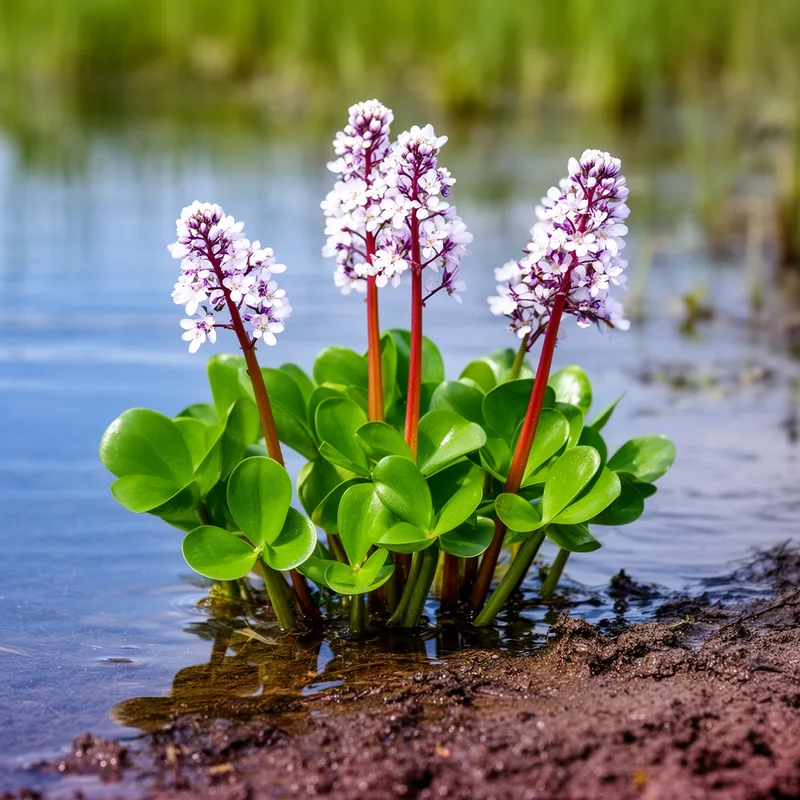
buckbean
- noun
- /ˈbʌkˌbiːn/
- UK
- The buckbean thrives in marshy areas and produces striking white flowers in late spring.
Examples
-
Early settlers sometimes brewed a tonic from the leaves of buckbean, despite its bitter taste.
-
Clusters of buckbean can be seen spreading across the surface of shallow ponds.
-
The buckbean thrives in wetland environments.
-
Many buckbeans bloom in the spring.
-
Clusters of buckbean can be seen spreading across the surface of shallow ponds.
-
The buckbean thrives in marshy areas and produces striking white flowers in late spring.
-
Early settlers sometimes brewed a tonic from the leaves of buckbean, despite its bitter taste.
Synonyms

A long-lived water plant with white or purple flowers and bitter three-part leaves
A marsh plant with leaves that have three parts and small white or purple flowers that grows at pond edges

A plant with leaves divided into three small parts and white or light purple flowers that grows at water edges

A plant that grows in water with three-part leaves and small white or purple flowers
Compounds

Surface Forms
Morphology
Etymology
Buckbean is made of the parts buck and bean, and it is related to the name bogbean; the plant has broad 'bean-like' leaves and grows in marshes, so thinking of a 'bean in the bog' helps you remember it is a wetland plant.

