
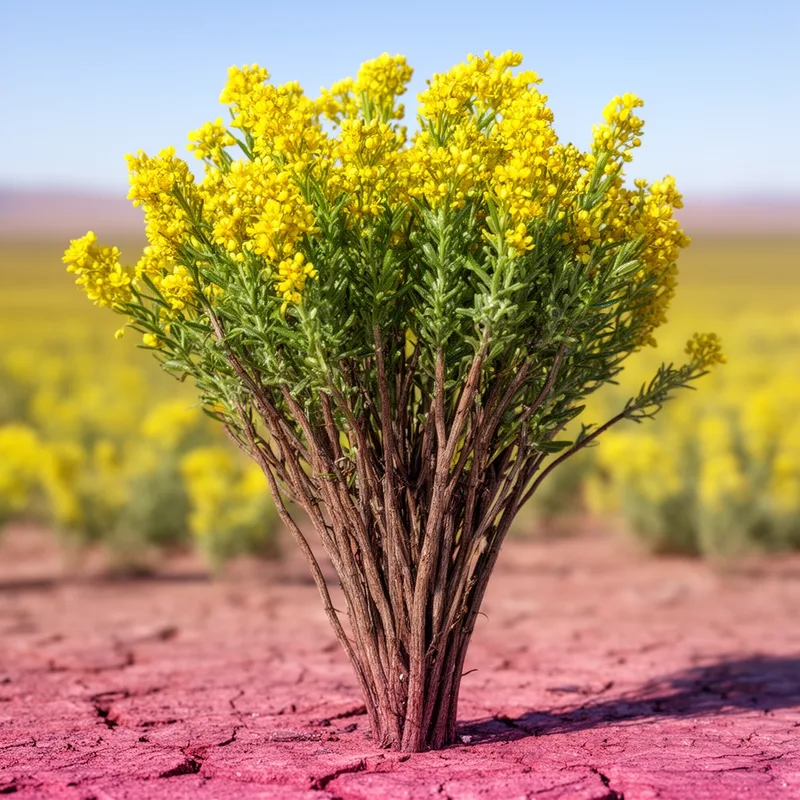
broom-weed
- noun
- /ˈbruːmˌwiːd/
- US
- We identified the plant as broom-weed due to its sticky leaves and woody branches.
Examples
-
Large fields of broom-weed turn yellow when the flowers are in full bloom.
-
The rancher struggled to control the spread of broom-weed on his property.
-
The broom-weed grows abundantly in the desert.
-
Many gardeners dislike broom-weed for its sticky leaves.
-
In spring, the fields are filled with broom-weed that brightens the landscape with its yellow flowers.
-
The gardener noticed that the broom-weed spread quickly in the warm climate of the southwestern United States.
-
During our hike, we came across a patch of broom-weed, easily recognizing it by its sticky foliage and woody branches.
Synonyms

A small annual plant with stiff branches, sticky leaves, and yellow flowers

A small annual plant with sticky leaves and yellow flowers that grows in dry soil
Surface Forms
Morphology
Etymology
Broom-weed comes from broom, a stiff shrub once used to make brooms and remembered as 'a plant used to sweep', plus weed, meaning 'a wild plant'. So the name helps you remember that broom-weed is a woody, wild plant with stiff branches and yellow flowers.

