
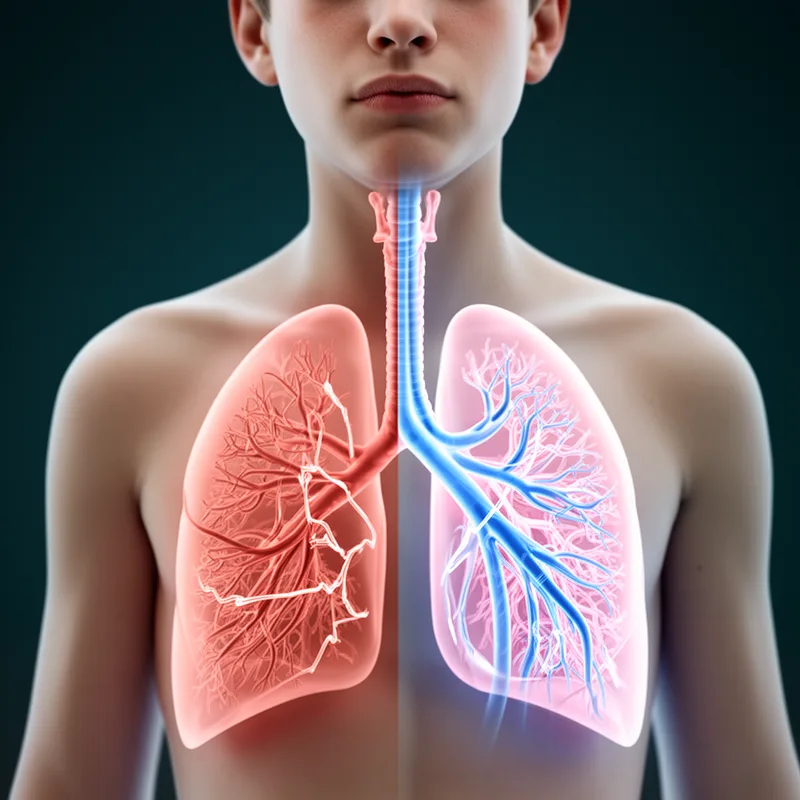
bronchodilatation
- noun
- /ˌbrɒŋkoʊˌdaɪləˈteɪʃən/
- UK
- The doctor explained that bronchodilatation occurs when the air passages in the lungs widen, making it easier to breathe.
- greater bronchodilatation
Examples
-
This bronchodilatation follows transient (< 1 min) bronchoconstriction (n11) and lasts no longer than 3 min (n12, 13).
Academic text (1992) -
Cough may itself induce bronchodilatation, but is not the main causative factor after capsaicin inhalation because lignocaine inhalation blocks the bronchodilatation but not the cough.
Academic text (1992) -
This impaired NANC efferent activity will result in impaired bronchodilatation and a greater tendency to morning bronchoconstriction.
Academic text (1992) -
Cough may itself induce bronchodilatation, but is not the main causative factor after capsaicin inhalation because lignocaine inhalation blocks the bronchodilatation but not the cough.
Academic text (1992) -
During an asthma attack, bronchodilatation can help to alleviate the difficulty in breathing.
-
Medications that promote bronchodilatation are often prescribed to patients with chronic obstructive pulmonary disease.
Antonyms
- Specialized


 1
8.1
The airways in the lungs become narrower when muscles around them tighten
How Constricted
- Specialized
1
8.1

- UK
Surface Forms
Morphology
bronchodilatation = dilatation (semi-transparent) = broncho + dilatation
While the structural base is 'dilatation', the combining form 'broncho-' is medical and likely unfamiliar to average B1 learners.
Etymology
Bronchodilatation combines broncho- 'airway' or 'windpipe' and dilatation 'widening', like the common word dilate. So, bronchodilatation is the widening of the air passages, which makes breathing easier.