
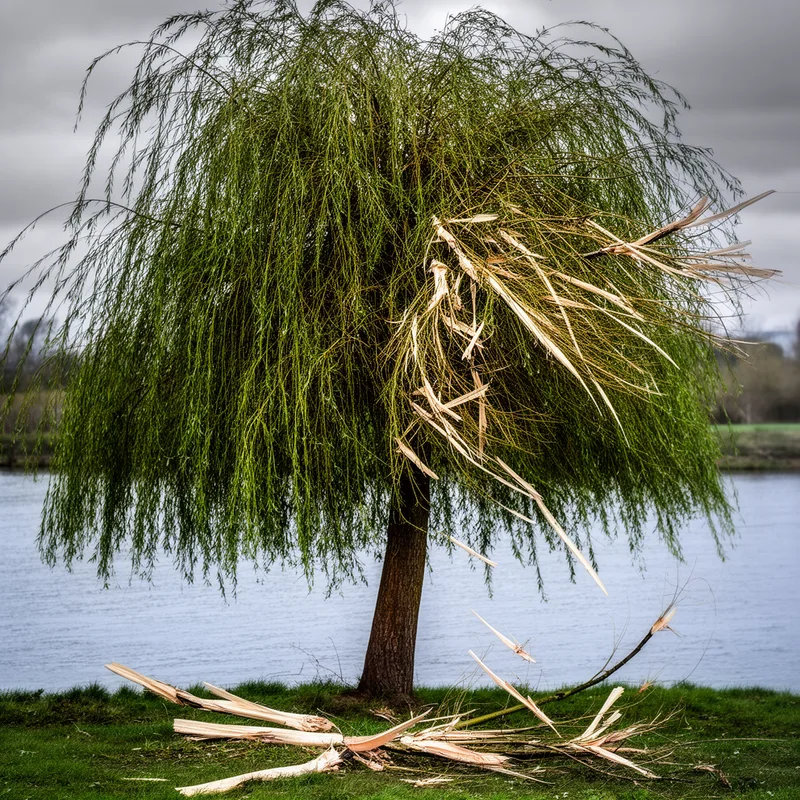
brittle willow
- noun
- /ˈbrɪtəl ˈwɪloʊ/
- UK
 :
sauce quebradizo
:
sauce quebradizo
- The brittle willow in the garden lost several branches during the storm.
Examples
-
Because of its weak branches, the brittle willow is often damaged by strong winds.
-
The park was lined with brittle willows, their branches easily snapping in the brisk wind.
-
Her favorite spot by the river was shaded by a majestic brittle willow.
-
The brittle willow swayed gently in the wind.
-
Many brittle willows grow near the riverbank.
-
The brittle willow often sheds branches at the slightest touch due to its fragile nature.
-
During the storm, the brittle willow in our yard broke several branches because of its weak structure.
Synonyms

A large willow tree with brittle branches that break easily

A large tree with stiff branches that break easily, often growing by rivers

A large willow tree with stiff branches that break easily
Surface Forms
Morphology
The noun phrase meaning is directly compositional: 'brittle' (liable to break) modifies 'willow' (a type of tree), so a learner who knows both words can infer a willow with easily broken branches. This simple adjective + noun pattern is a standard, cross-linguistically common composition and therefore readily understandable at B1.
Etymology
Brittle willow comes from the tree's look: brittle means 'easy to break' and the willow has stiff branches that snap in strong wind. That's why 'brittle willow' refers to a willow tree with weak, easily broken branches.

