
brightness constancy
- noun
- /ˈbraɪtnəs ˈkɒnstənsi/
- Specialized
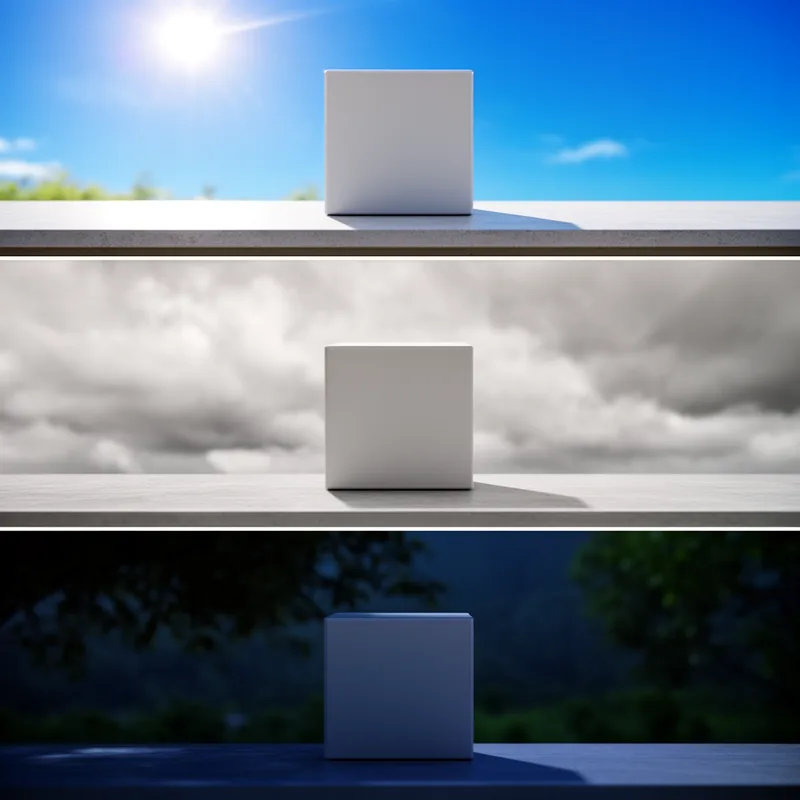
- The phenomenon of brightness constancy allows us to recognize objects in both sunlight and shade.
Examples
-
Even when a room is dark, brightness constancy enables us to see the object as similarly bright as it appears in daylight.
-
Despite clouds changing the outdoor lighting, brightness constancy helps us judge the true shade of objects.
-
Young children may develop brightness constancy as their visual perception matures.
-
The concept of brightness constancy is fascinating.
-
Why does brightness constancy occur in our perception?
-
In art, brightness constancy is crucial for depicting how colors maintain their appearance regardless of lighting changes.
-
Researchers study brightness constancy to understand how humans perceive consistency in object brightness under various light sources.
Surface Forms
Morphology
The term is directly compositional: 'brightness' (degree of lightness) combined with 'constancy' (tendency to remain the same) yields the idea of brightness remaining stable across conditions. Although it is a technical term used in perception research, a B1 learner who knows both constituent words can reasonably infer the general meaning without prior exposure.
Etymology
Brightness constancy comes from how our eyes and brain keep an object's brightness looking the same even when the light changes. Imagine a white shirt in bright sun and in deep shade; because the brain 'keeps' the same brightness for the object, we still know it is white. That's why the term means 'seeing an object as the same brightness even when the light changes'.

