
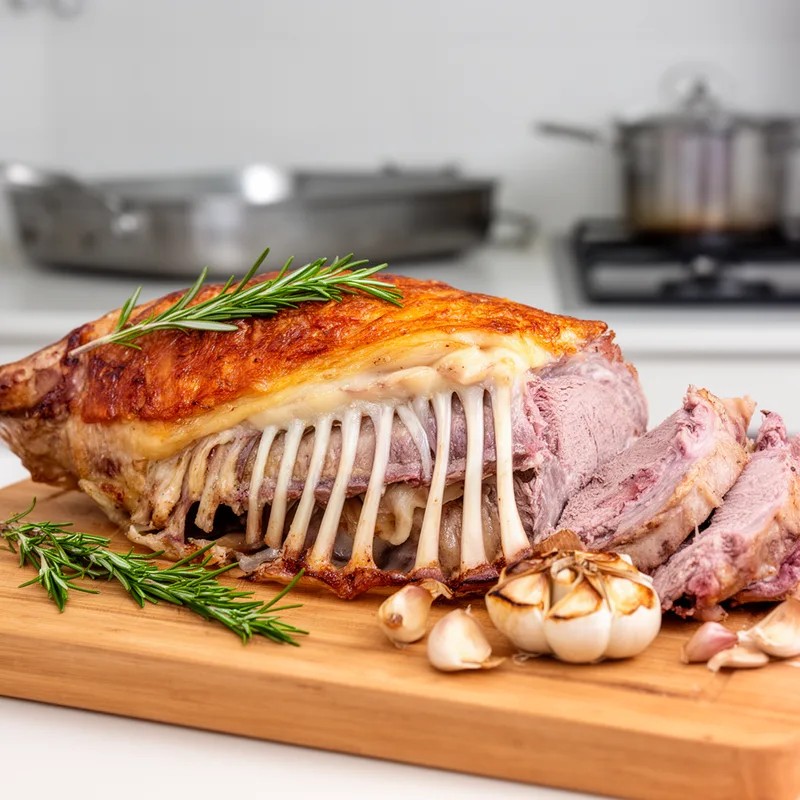
breast of lamb
- noun
- /brɛst əv læm/
- The chef recommended slow-cooking the breast of lamb for maximum tenderness.
Examples
-
She bought a breast of lamb to make a hearty stew for dinner.
-
A roasted breast of lamb pairs well with rosemary and garlic.
-
The chef prepared a delicious breast of lamb for dinner.
-
I ordered a breast of lamb at the restaurant last night.
-
A roasted breast of lamb pairs perfectly with rosemary and garlic for a flavorful meal.
-
She bought a breast of lamb to make a hearty stew that would warm everyone up on a cold night.
-
The chef recommended slow-cooking the breast of lamb to ensure the meat was tender and juicy.
Synonyms

 133
1.0
133
1.0

Meat from a young sheep for eating
 1
1.6
1
1.6
Meat from a young sheep that is cooked in an oven or over a fire until brown


 1
2.0
1
2.0
A large piece of lamb cooked whole in an oven

A cut of lamb that has the breastbone and is cooked for meals
A piece of meat from a lamb that you cook
Surface Forms
Morphology
The phrase is a straightforward compositional noun phrase: a B1 learner who knows 'breast' (a body/cut) and 'lamb' (young sheep/meat) can infer it denotes the breast portion or cut of a lamb. This follows a common 'X of Y' possession/part pattern and is cross-linguistically predictable in culinary contexts, so the meaning is transparent.
Etymology
Breast of lamb names the front chest of the animal: breast means the chest and lamb shows which animal. Because this part has bone and fat, it stays tender and full of flavor when slow-cooked, so the phrase refers to the 'cut' used for 'roasts' and 'stews'.