

breakable
 5
1.3
5
1.3

- adjective
- /ˈbreɪkəbl/
 :
quebradizo
:
quebradizo
- Plastic containers are the preferred reservoirs because glass containers are breakable and may leach certain nutrients such as potassium and boron.
- easily breakable
- breakable glass
- breakable things
You don't drop things, especially breakable things.
- You don't drop things, especially breakable things.
- I'd rather the process be murky and breakable then put on a pedestal.
- What's less, I'm trying to think of, like, what's more breakable than you in a twig?
- I mean, I don't know the code, I don't know if it's breakable.
- OK, I'm pretty sure it's breakable.
Examples
-
For example, if you have small children in your home, you have to steer clear of breakable accessories.
Blog text (27) -
You don't drop things, especially breakable things.
-
The border between myself and the outside world had never seemed so breakable.
Fiction book (1994) -
Jump across, and a little higher is a breakable box with the brick.
Blog text (10) -
I took it, but felt toward it the way I felt toward all those breakable things in her mother's living room.
Fiction book (1996) -
You don't want anything breakable in your apartment.
-
Because of exposure to the sun, your hair could become dry, breakable, vulnerable, and discolored.
Blog text (2) -
I had never noticed how slight Chick's legs were, how breakable.
Fiction book (1999) -
Glen's face is pale as marble in the watery moonlight, like something foreign and breakable.
Fiction book (1997) -
Please handle these plates carefully; they are all breakable.
Synonyms
 188
3.8
188
3.8
Easily broken and needing gentle care
 83
3.4
83
3.4
Easily broken or damaged because it is not strong
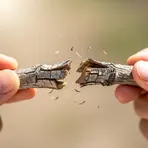 31
3.9
31
3.9
Hard and likely to break
 25
3.8
25
3.8
Thin and not strong so it breaks or tears easily
 1
4.8
1
4.8
Easy to break or damage


 1
9.9
1
9.9
Easily broken or damaged

Breaks easily into small pieces

Breaks when pressure is applied
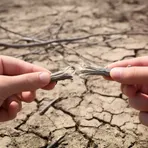
Easily breaks or snaps
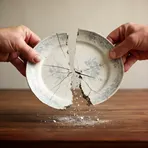
Likely to break or crack easily
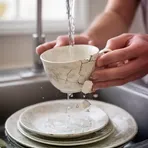
Easily broken like old pottery or thin plates
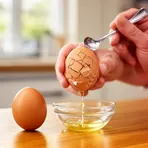
Easy to break, open, or solve with effort

A thing that people can break or damage so it stops working and is gone
Antonyms
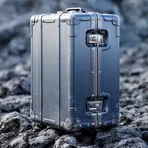

How Fragile

Surface Forms
Morphology
Etymology
Breakable comes from the simple word break ('to damage or separate') and the ending -able ('able to be'), so it literally means 'able to be broken' and is used for things that are easily damaged.