
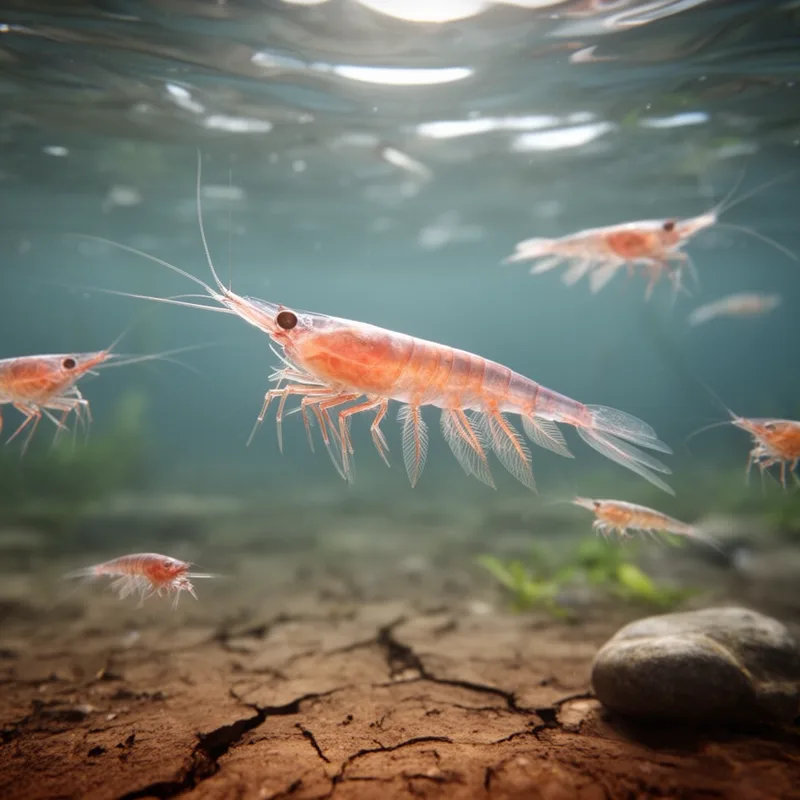
branchiopodous
- adjective
- /ˌbræŋkiəˈpoʊdəs/
- Specialized
- Fairy shrimp are a branchiopodous species commonly found in seasonal pools.
Examples
-
Scientists study branchiopodous crustaceans to better understand aquatic ecosystem dynamics.
-
The branchiopodous species are vital to freshwater ecosystems.
-
The branchiopodous anatomy is well-suited for life in temporary freshwater habitats.
-
Have you studied any branchiopodous organisms before?
-
Fairy shrimp are a branchiopodous species commonly found in seasonal pools.
-
Scientists study branchiopodous crustaceans to better understand aquatic ecosystem dynamics.
-
The branchiopodous anatomy of these small crustaceans is adapted for life in freshwater.
Synonyms
Relating to small freshwater crustaceans that have many leaflike limbs

Relating to small water animals that have flat legs for swimming and breathing
Surface Forms
Morphology
branchiopodous = branchiopod (semi-transparent) = branchiopod + ous
Formation is a regular adjective from the noun 'branchiopod' using the productive suffix '-ous', but the noun is a technical taxonomic term built from Greek combining forms and is unlikely to be known to average learners.
Etymology
Branchiopodous comes from Greek roots branchia 'gill' and pod 'foot', so it means 'gill-foot' because these animals have legs that work like gills. That's why branchiopodous describes small freshwater animals like fairy shrimp, whose many legs help them breathe and swim.

