

branchial cleft
- noun
- Specialized
- The schematic diagram illustrates the branchial clefts and pouches during development.
- branchial cleft anomaly
- branchial cleft cyst
- first branchial cleft
Examples
-
The failure of a branchial cleft to close results in the development of a persistent sinus tract.
Academic text (2006) -
The embryology of the neck is determined by changes in the branchial clefts during development.
Academic text (1995) -
A diagnosis of a type II first branchial cleft cyst was made.
Academic text (2009) -
A number of theories exist to explain the genesis of branchial cleft anomalies.
Academic text (1995) -
The pathologist felt the mass most likely represented a branchial cleft cyst.
Academic text (1995) -
We present a series of 12 patients with first branchial cleft anomalies classified according to anatomic criteria.
Academic text (1998) -
Congenital sources of neck masses in children include cystic hygroma, branchial cleft cysts, and thyroglossal duct cysts.
Academic text (2004) -
The failure of a branchial cleft to close results in the development of a persistent sinus tract.
-
The embryology of the neck is determined by changes in the branchial clefts during development.
-
The schematic diagram illustrates the branchial clefts and pouches during development.
Synonyms

A slit in the throat of fish and other water animals that lets water pass for breathing
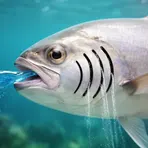
An opening on the side of a fish's head that lets water pass so the fish can breathe
Surface Forms
Morphology
The compound meaning is directly derivable from 'branchial' (related to gills) and 'cleft' (a narrow opening), so a learner who knows both constituents can infer it refers to a gill-associated slit or opening. Although the term is technical, its composition follows standard English morphological patterns and is conceptually transparent across languages, making it understandable to a learner who knows the parts.
Etymology
The term branchial cleft uses branchial (meaning 'gill') and cleft (meaning a small 'opening'). These are the small slits in a fish's throat where water passes so the fish can 'breathe', so the name tells us what they do.

