
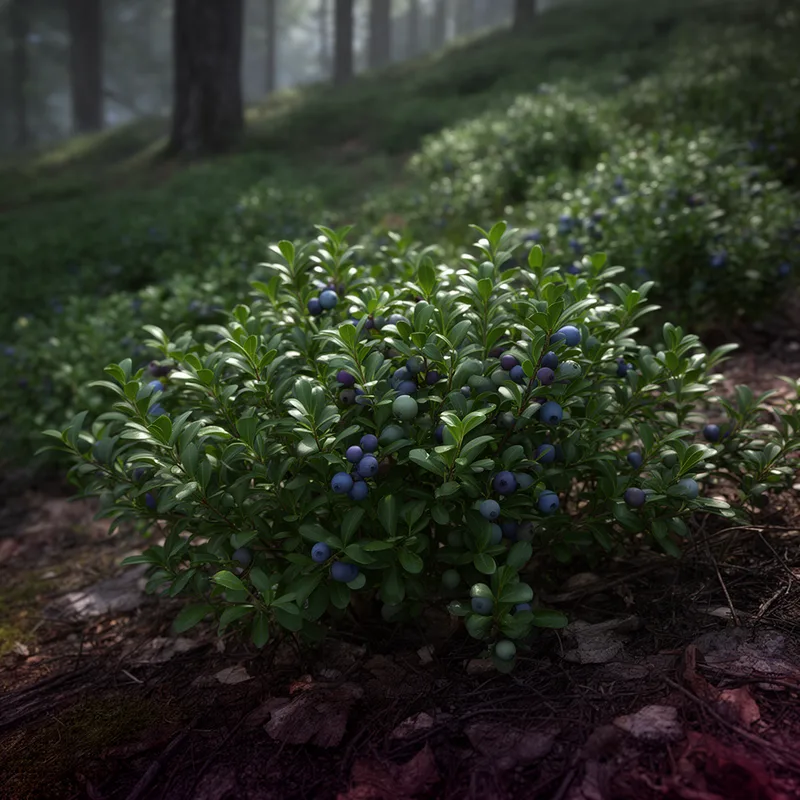
box huckleberry
- noun
- /bɑks ˈhʌkəlˌbɛri/
- US
- The box huckleberry thrives in the wooded areas of the southeastern United States.
Examples
-
Botanists were excited to find a large colony of box huckleberry thriving undisturbed for centuries.
-
The box huckleberry is often found in the forests of Georgia.
-
The box huckleberry prefers shady, wooded slopes in its natural habitat.
-
Unlike other related species, the berries of the box huckleberry are nearly flavorless.
-
Do you know what a box huckleberry looks like?
-
In the park, I discovered a patch of box huckleberry with its shiny leaves glistening in the sunlight.
-
The box huckleberry is known for its flavorless berries, which are often overlooked by foragers.
Synonyms

A low evergreen shrub with small shiny leaves and nearly tasteless berries
Surface Forms
Morphology
The compound noun 'box huckleberry' is directly interpretable as a type of huckleberry associated with 'box' (i.e., having box-like leaves or relation to box shrubs). A B1 learner who knows 'box' and 'huckleberry' can reasonably infer it denotes a particular shrub species, so the meaning is compositionally transparent despite its botanical specificity.
Etymology
The plant name box huckleberry may come from how it looks: its small shiny leaves look like a box plant and it makes tiny berries like a huckleberry. So the name helps you remember it is a low, ground-growing 'evergreen shrub' with box-like leaves and small, nearly flavorless berries.

