

bouzouki
 1
8.6

- noun
- /buˈzuːki/
- During dinner, we enjoyed Greek dishes while listening to the sweet sounds of the bouzouki.
- bouzouki player
Examples
-
Then, at last, there was the sound of strings from the top of the stoop on which Anna was sitting—a bouzouki's song, she could tell, without having to turn around.
Fiction book (1999) -
She admired the intricate craftsmanship of the bouzouki hanging on the wall in the café.
-
And then the woman with the bouzouki stepped toward Anna B.
Fiction book (1999) -
Sometimes he strums the bouzouki.
Fiction book (1998) -
Especially since one of the best bouzouki players I've ever heard is Beth Patterson.
Blog text (9) -
You see, Anna B. can play the bouzouki; the bouzouki and the cello aren't really that different, though the sounds they make are distinct enough.
Fiction book (1999) -
He plays the bouzouki.
Blog text (14) -
But her hands, he told me, the way she gripped the bouzouki's thin neck, plucking and strumming indivisible chords up and down the scales.
Fiction book (1999) -
The musician played a lively tune on the bouzouki at the village festival.
Synonyms
 54
3.3
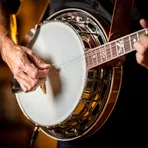
An instrument with strings, a long neck and a round body played by plucking or strumming


 1
9.9
A long-necked string instrument used in Balkan and other Eastern European folk music
 1
9.9
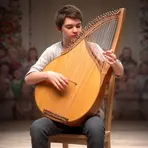
A Ukrainian string instrument like a lute with a rounded body and many strings
Surface Forms
Etymology
The word bouzouki comes from the Turkish word bozuk, which means 'broken' or 'changed'. It got this name because players used a different, 'broken' tuning for the instrument, so bouzouki now means the long-necked Greek string instrument.