
bombycid
- noun
- /ˈbɑːmbɪsɪd/
- Specialized
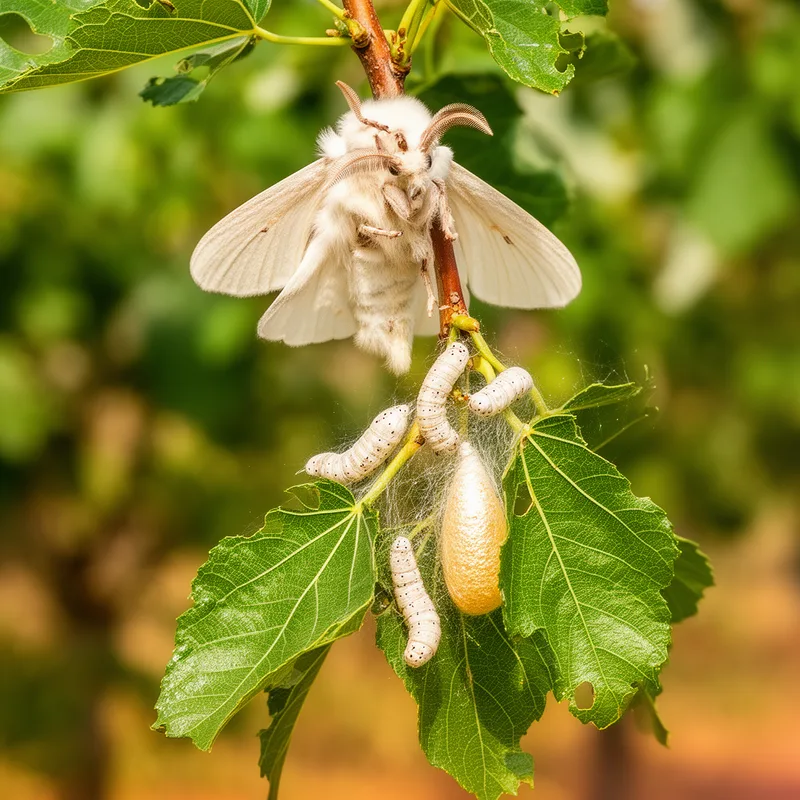
- The bombycid is most famous for its silk-producing larva, known as the silkworm.
Examples
-
Farmers cultivate mulberry leaves to nourish the young bombycid caterpillars, ensuring a steady silk supply.
-
Several species of bombycid moths are native to Asia, especially China and India.
-
Scientists study the bombycid to improve sericulture and silk production techniques.
-
The bombycid moth is known for its silk production.
-
Many bombycids are found in Asia.
-
The bombycid moth's larvae play a crucial role in the production of silk used in textiles.
-
In the forests of Asia, researchers observe various bombycid species that thrive on mulberry trees.
Synonyms

A medium-sized Asian moth whose caterpillars eat mulberry leaves and make silk
Compounds
- Indian
A medium-sized Asian moth whose caterpillars eat mulberry leaves and make silk
Surface Forms
Morphology
bombycid = bombyx (opaque) = bombyc + id
The element 'bombyc' (from the taxonomic stem) plus the suffix '-id' are specialized scientific elements unfamiliar to B1 learners, so the meaning 'moth of the Bombycidae' is not derivable from everyday English components.
Etymology
The word bombycid comes from the old Greek word bombyx, which means 'silkworm', plus the ending -id meaning 'related to'. So bombycid refers to moths connected to silkworms and silk, which is why their young caterpillars eat mulberry leaves and make silk.

