
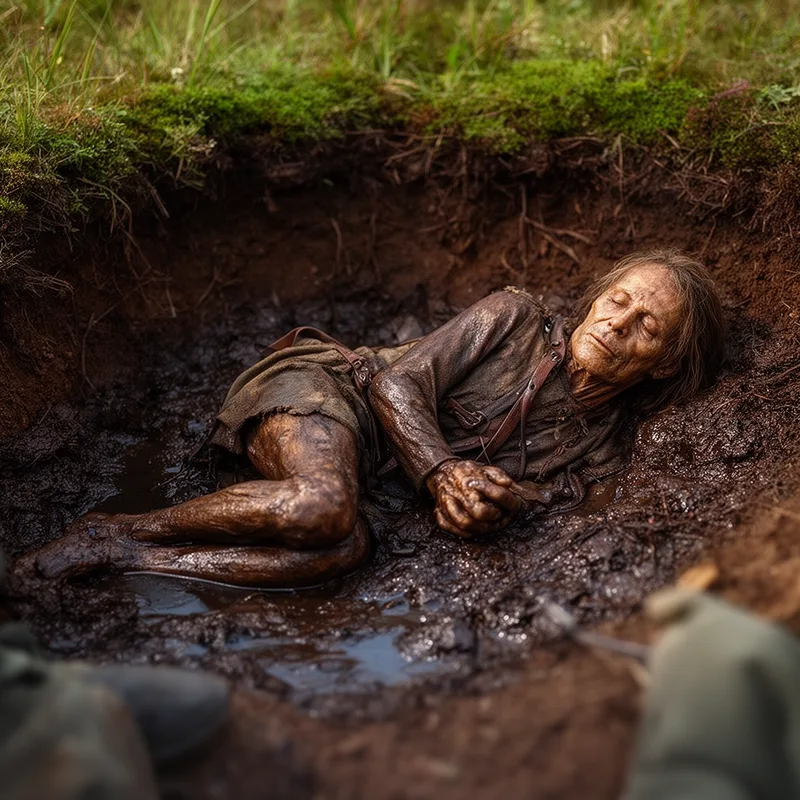
bogman
- noun
- /ˈbɔɡˌmæn/
- UK
- Several bogmen have been discovered across Europe.
Examples
-
The bogman discovered in the ancient peat bog was remarkably well-preserved after centuries.
-
The bogman found in Denmark dates back to the Iron Age.
-
The ancient bogman was discovered by archaeologists during a dig in northern Europe.
-
Visitors to the museum were fascinated by the well-preserved features of the bogman on display.
-
Scientists studied the clothing and hair of the bogman to learn about life in the Iron Age.
-
Archaeologists studied the remains of the bogman to learn about life thousands of years ago.
-
The bogman found in Ireland provided important insights into the Iron Age culture.
Synonyms

 ∞
1.6

The dead remains of a person or animal
Surface Forms
Morphology
Etymology
Bogman comes from bog + man, where bog comes from an old Irish word meaning 'soft, wet ground' and man means 'person'. In northern Europe, some human bodies are naturally kept in peat bogs for thousands of years, so a bogman is a human body found and kept in a bog.