

bog laurel
- noun
- US
- The pale leaves of the bog laurel have a glaucous underside.
Examples
-
We spotted a beautiful bog laurel blooming by the lake's edge.
-
I saw a bog laurel while hiking in Oregon.
-
Hikers are warned not to touch the bog laurel as it can be toxic.
-
The bog laurel blooms beautifully in spring.
-
The small, purple flowers of the bog laurel attract many pollinators during the summer.
-
As we walked through the wetland, we noticed the distinctive glaucous leaves of the bog laurel shining in the sunlight.
-
In early spring, the bog laurel bursts into bloom, covering the area with vibrant purple blossoms.
Synonyms
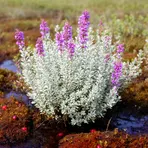
A low evergreen shrub that grows in wet bogs and has small purple flowers and pale leaves

A low-growing shrub in bogs of the northwest United States with small purple flowers and pale blue-green leaves below
Surface Forms
Morphology
The meaning is directly and compositionally derived from 'bog' (a damp peatland) + 'laurel' (an evergreen plant): it denotes a laurel that grows in boggy areas, which matches the given definition. This noun–noun naming pattern for plants (habitat + species) is common cross-linguistically and therefore a B1 learner who knows both constituents should be able to infer the meaning.
Etymology
Bog laurel: The name bog laurel comes from bog ('a wet, marshy place') and laurel ('a plant with shiny leaves'). So, it is a small shrub with pale leaves and purple flowers that looks a bit like a laurel and usually grows in bogs, which is why we call it bog laurel.

