
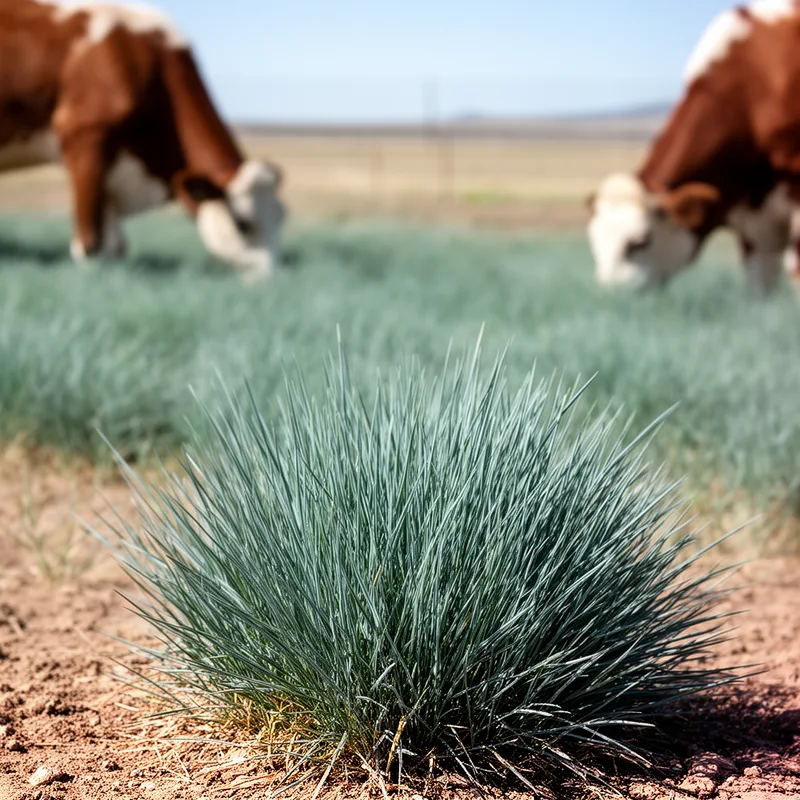
blue grama
- noun
- /bluː ˈɡræmə/
- US
- Farmers often plant blue grama to provide quality forage for their cattle during the warm months.
- blue grama grass
Examples
-
About one-third of the San Pedro Basin is covered with hardy grasses like blue grama, sideoats grama, and sacaton grass.
Academic text (2002) -
The healthy ecosystem of the prairie is supported by grasses like blue grama, which offers shelter and food to various wildlife.
-
Right now, warm-season grasses like blue grama, Bouteloua gracilis, dominate the shortgrass prairie in Colorado.
Academic text (1997) -
However, there were casualties: native grass species, like buffalograss and blue grama, which once thrived in North American temperate grasslands, have been widely replaced by non-native species.
Blog text (28) -
In the summer, the fields are lush and green with patches of blue grama swaying in the breeze.
Synonyms

A short grass that grows on dry plains in western North America and is good for grazing cattle
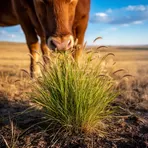
A grass that grows on American plains and feeds farm animals
Surface Forms
Morphology
The phrase is a straightforward color + noun combination: a B1 learner who knows 'blue' and 'grama' will readily infer it denotes a type of grama grass that is blue or blue-green in appearance. This descriptive compositional pattern (color modifying a noun to name a variety) is common cross-linguistically, so the meaning is directly derivable from the constituents.
Etymology
Blue grama comes from the blue-green look of its leaves and the word grama, an old Spanish word for 'grass' used by ranchers. So the name literally means a blue-tinted grass that people use as food for grazing animals.

