

blue bugle
- noun
- UK
- The blue bugle blooms beautifully in spring.
Examples
-
She planted blue bugle to attract bees and butterflies to her backyard.
-
Botanists studied the spread of blue bugle in Mediterranean habitats.
-
The garden's border was lined with striking blue bugle in full bloom.
-
I saw a blue bugle in my neighbor's garden.
-
The garden was filled with vibrant flowers, including blue bugle, which added a splash of color with its striking blossoms.
-
In spring, the blue bugle blossoms beautifully along the pathways of the park.
-
She decided to plant blue bugle in her garden because of its lovely blue flowers that attract bees.
Synonyms


 1
9.6
1
9.6
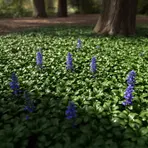
A low evergreen plant that spreads to cover the ground

A plant that lives for several years with upright stems and bright blue flowers

A plant that grows upright with bright blue flowers each year

A low, spreading evergreen plant used to cover the ground in gardens
Surface Forms
Morphology
This is a straightforward adjective + noun compound: 'blue' (color) modifying 'bugle' (a plant), so the phrase denotes the bugle plant that is blue-flowered. The meaning is directly compositional and follows common cross-linguistic naming patterns, so a B1 learner who knows both constituents would readily infer it.
Etymology
Blue bugle gets its name from the plant's bright blue flowers, which are shaped like a small bugle, a little trumpet, so the name points to a 'blue-flowered plant'.