
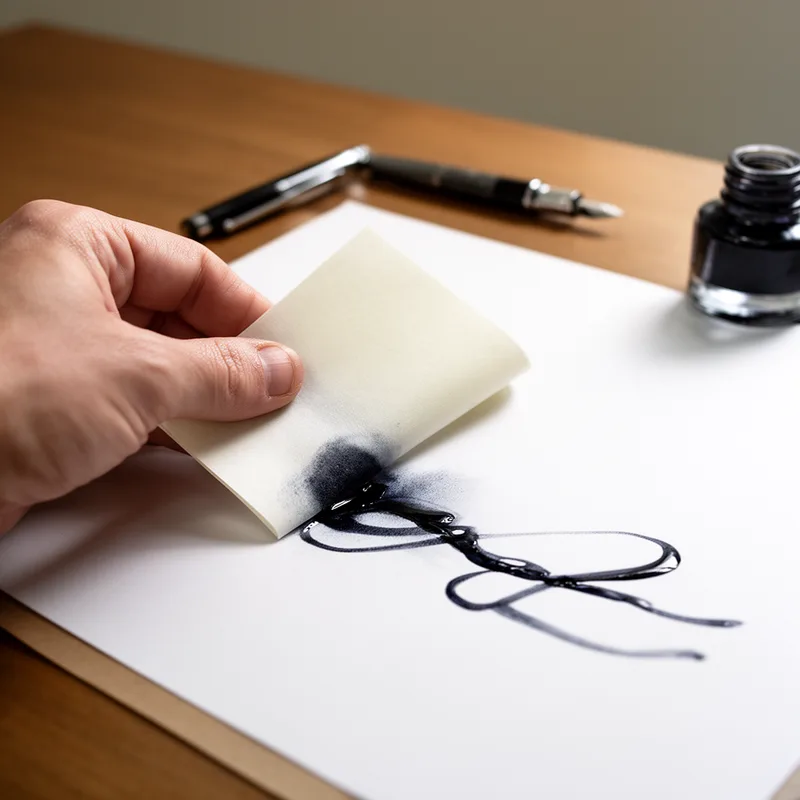
blotting paper


 1
3.7
1
3.7
- noun
- /ˈblɑːtɪŋ ˈpeɪpər/
- So imagined, the blotting paper serves as a veil or mantle enshrouding the writer's work in secrecy.
Examples
-
Blotting paper, as in Austen's example, serves as an enclosure around the scene of writing.
Academic text (2017) -
Writing under the blotting paper's protective cover, Bloom can compose freely.
Academic text (2017) -
Crime fiction made good use of blotting paper.
Academic text (2017) -
Clifford wrote an envelope, after all, and we have by now become familiar with blotting paper's utility for women writers.
Academic text (2017) -
For this young writer first imagining a room of her own, the blotting paper effectively partitions her from the wider world.
Academic text (2017) -
Blotting paper assumes an instrumental role in Woolf's late fiction, particularly in The Years (1937).
Academic text (2017) -
And if ink is the sorry writer's lifeblood, then blotting paper is the sine qua non of authorial practice.
Academic text (2017) -
After writing her letter, she used blotting paper to absorb any excess ink.
-
The artist carefully placed a piece of blotting paper under her painting to prevent smudging.
-
He always kept blotting paper on his desk to clean up spills from his ink bottles.
Synonyms
 3
6.1
3
6.1
A piece of paper that soaks up extra ink from writing
How Absorbent

Surface Forms
Morphology
The meaning 'absorbent paper used to soak up excess ink' is directly and compositionally derived from 'blot' (to soak up liquid) + 'paper' with the -ing form indicating purpose; this verb-ing + noun pattern is a common, productive formation in English. A B1 learner who knows both constituents would readily infer that 'blotting paper' is paper used for blotting, so the expression is transparent.
Etymology
Blotting paper comes from the verb blot and the word paper, and blot means 'to soak up'. People used thin sheets of this paper to press on wet writing so it would take the extra ink like a small sponge, so the name means paper for 'soaking up' extra ink.