
blastema


 1
9.9
- noun
- /blæˈstɛmə/
- Specialized
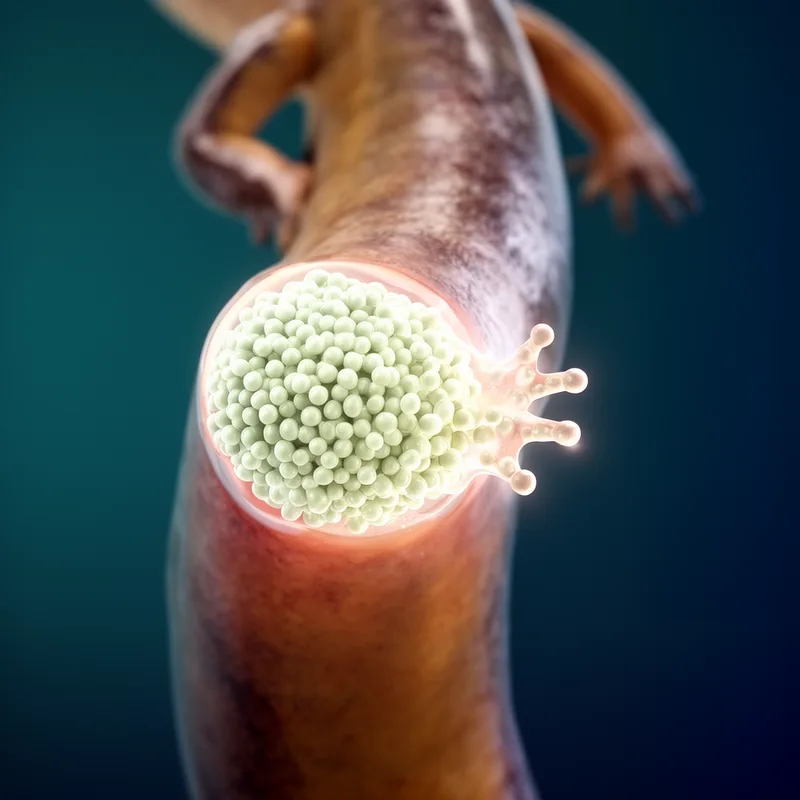
- Undifferentiated cells are accumulated beneath the WE, forming a regeneration blastema.
- blastema formation in regeneration
- blastema induction
- blastema formation
Examples
-
As mentioned above, a blastema is similar in structure to the distal part of a developing limb bud.
Academic text (2018) -
Therefore, blastema induction remains a primary issue in regeneration-incompetent animals.
Academic text (2018) -
The first step, blastema formation, has been a significant challenge thus far; however, regeneration-incompetent animals cannot form a blastema.
Academic text (2018) -
We still do not know how to induce a blastema in amniotes.
Academic text (2018) -
For example, mammals cannot grow a blastema after limb amputation.
Academic text (2018) -
Regeneration blastemas are thought to have a similar structure to developing limb buds.
Academic text (2018) -
Furthermore, Xenopus Fgf8 is expressed in a blastema epithelium 64.
Academic text (2018) -
The inability to induce a blastema after amputation can also be observed from the embryonic period in regeneration-incompetent animals.
Academic text (2018) -
Application of ectopic Fgf2 + Fgf8 in a skin wound is sufficient to induce a blastema in urodele amphibians 18.
Academic text (2018) -
In the regeneration process, a blastema forms at the site of injury, enabling new tissue to develop.
Surface Forms
Etymology
Blastema comes from the Greek blastos, which means 'sprout' or 'bud'. Think of a blastema as a little 'sprout' of cells that can grow into a new arm or organ, so the name fits its role in making new body parts.