
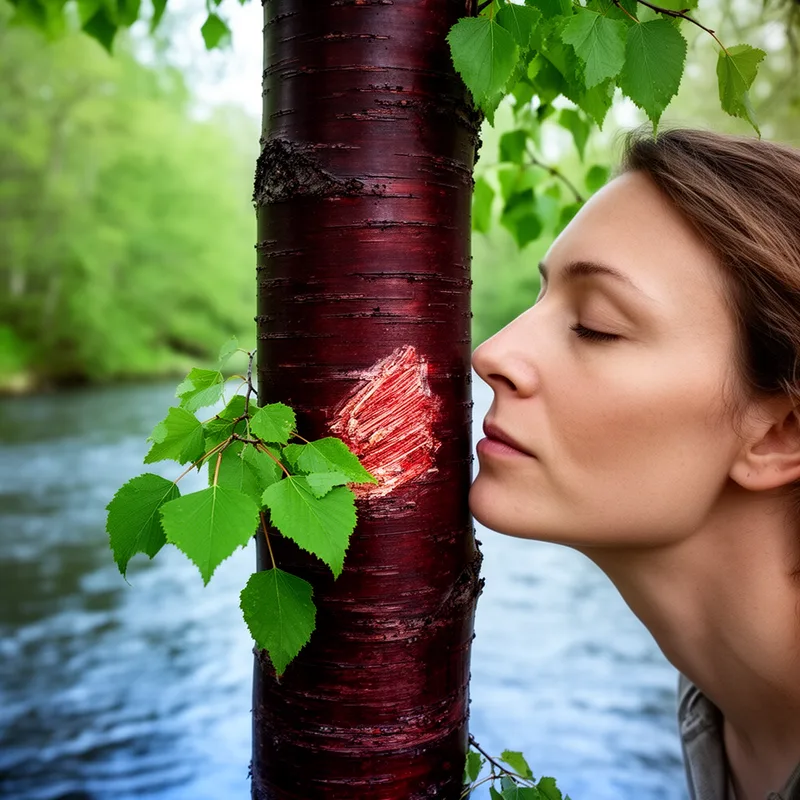
black birch
- noun
- /blæk bɜrʧ/
- US
- While hiking in the forest, I spotted a tall black birch with its distinctive dark bark that caught my attention.
Examples
-
The syrup harvested from the black birch tree has a unique flavor that many people love to use in their recipes.
-
A yellow-bellied sapsucker punched holes into black birch.
Fiction book (2000) -
In contrast, red oak, chestnut oak, red maple, and black birch had large increases in recruitment following European settlement in much of the eastern forest (Abrams 1998).
Academic text (2007) -
In the autumn, the leaves of the black birch turn a bright yellow, creating a beautiful contrast against its dark bark.
Synonyms

A birch tree with dark, spicy-scented bark and hard wood used for furniture and flavoring
A North American tree with dark bark that smells like mint and has hard wood used for furniture
Surface Forms
Morphology
The noun phrase is a straightforward adjectival compound where 'black' describes the color/appearance of a 'birch', so the meaning 'a birch tree with dark bark' is directly derivable from its parts. This is a common adjective + noun composition found across languages, so an average B1 learner who knows 'black' and 'birch' will readily understand the compound.
Etymology
Black birch is named for its dark, reddish bark and its strong, mint-like smell. The words black and birch paint the image of a birch tree with darker bark and a spicy scent, so the name tells you which kind of birch it is.

