
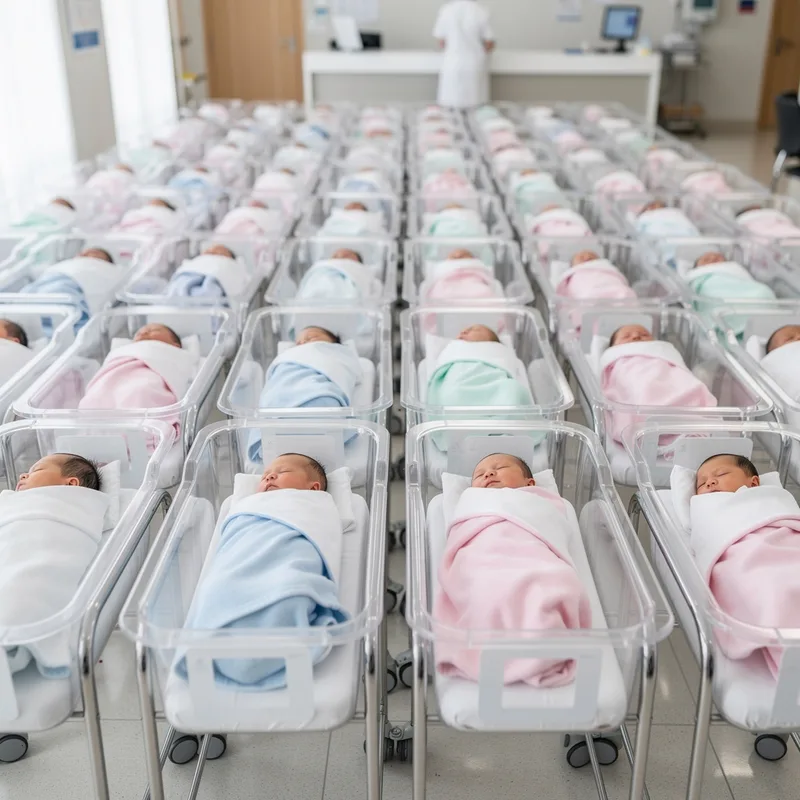
birthrate
 7
3.2
7
3.2

- noun
- /ˈbɜrθreɪt/
- Specialized
 :
tasa de natalidad
:
tasa de natalidad
- Third, increase the size of the economy and tax base by increasing the birthrate and raising more children.
- a high birthrate
- a low birthrate
- a declining birthrate
Examples
-
Yet all of these countries, except Malaysia, have birthrates well below the replacement level.
Academic text (2000) -
For most of human history, high birthrates and high mortality rates tended to balance each other out.
Academic text (2012) -
Not the least of these would be the need to dramatically slow the birthrate.
Academic text (1999) -
But isn't there a low birthrate right now?
-
A second obstacle to an increase in the Russian birthrate is the Russian family itself.
Academic text (2005) -
France was the first country to experience a declining birthrate in the nineteenth century.
Academic text (2012) -
The Japanese government has pursued policies aimed at increasing the birthrate, but these have been too halfhearted.
Academic text (2012) -
As a result, both countries enjoy healthy birthrates: near replacement level in France and slightly below replacement level in Sweden.
Academic text (2012) -
A dramatic, far-reaching, and as yet unremitting global reduction in childbearing and birthrates is now underway.
Academic text (2010) -
The birthrate in our country has significantly increased over the last decade.
Synonyms
 17
2.5
17
2.5
Number of live births per 1,000 people in a year
 13
3.7
13
3.7
The number of babies born alive for every 1,000 people each year
 3
2.8
3
2.8
The number of babies born per 1,000 people in one year

The number of live babies born per 1,000 people each year
Antonyms

- Specialized
26
2.7
The number of people who die in a population each year shown per 1,000 people
Surface Forms
Morphology
Etymology
The word birthrate is simply made of birth ('being born') and rate ('number' or 'speed'), the same rate you see in heart rate. So, birthrate means the 'number' of babies born in a group of people in a year, which is why we hear it when people talk about population change.