
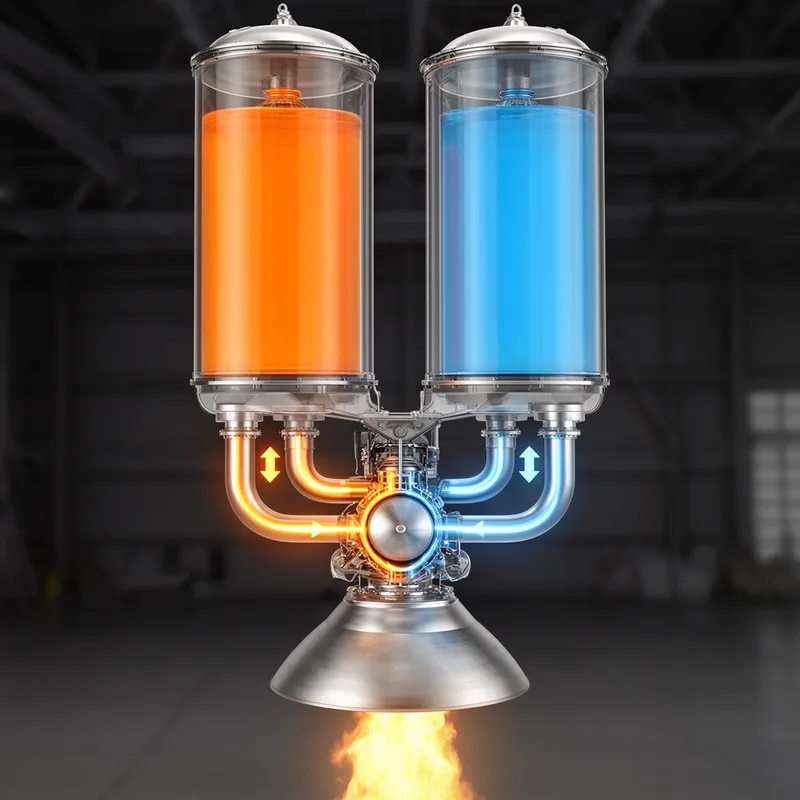
bipropellant


 1
9.1
- adjective
- /ˌbaɪˈprɒpələnt/
- Specialized
- The spacecraft was equipped with a bipropellant engine for efficient maneuvering in space.
Examples
-
Engineers chose a bipropellant system to achieve higher thrust during the rocket launch.
-
The engineers designed a bipropellant engine that utilized liquid oxygen and kerosene for optimal performance.
-
A bipropellant design allows for more precise control of the rocket's speed and direction.
-
The bipropellant engine is highly efficient.
-
Many modern rockets use a bipropellant system.
-
In order to increase efficiency, the rocket was fitted with a bipropellant system that mixed two propellants before combustion.
-
Using a bipropellant configuration, the spacecraft was able to achieve better fuel efficiency during its flight.
Surface Forms
Morphology
bipropellant = propellant (transparent) = bi + propellant
Clear, productive prefix 'bi-' (two) added to 'propellant', yielding the technical meaning 'using two propellants'.
Etymology
Bipropellant comes from the prefix bi- meaning 'two', as in bicycle, and propel meaning 'to push forward', as in propeller. So a bipropellant engine is one that uses two separate propellants, a fuel and an oxidizer, to push a rocket, which explains the modern meaning.