

bipolarization
- noun
- /ˌbaɪpəˌlɑːrəˈzeɪʃən/
- Specialized
- The scientist observed bipolarization in the material when it was exposed to a strong electric field.
Examples
-
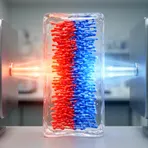
The experiment demonstrated how bipolarization leads to the creation of distinct positive and negative regions.
-
The bipolarization of the magnetic field was evident during the experiment.
-
Rapid bipolarization can occur in certain crystals under specific laboratory conditions.
-
Scientists observed a bipolarization effect in the electrical circuit.
-
The scientist observed bipolarization in the material when it was exposed to a strong electric field.
-
Rapid bipolarization can occur in certain crystals under specific laboratory conditions.
-
The experiment demonstrated how bipolarization leads to the creation of distinct positive and negative regions.
Synonyms
 2
6.8
2
6.8

A material that has one side positive and the other negative
How Polarized
- Specialized

- Specialized
2
6.8
Surface Forms
Morphology
bipolarization = bipolar (transparent) = bi + polar + ization
The word transparently denotes the process of becoming or making something bipolar, with the meaning contributed directly by 'bi-' + 'polar' + '-ization'.
Etymology
Bipolarization comes from bi- 'two' and polar 'poles', like the two ends of a magnet or a battery. So the word describes how a material comes to have distinct positive and negative regions, or two poles.