
biota
 1
9.3
1
9.3

- noun
- /baɪˈoʊtə/
- However, there are dramatic examples of huge impacts by freshwater biota living at the sediment-water interface.
- biota and sediment
- soil biota
- aquatic biota
Examples
-
Thus, soil water available to the biota may be increased with fewer, larger events in xeric ecosystems.
Academic text (2008) -
But fire cannot; it needs a biota in order to propagate.
Academic text (2008) -
America had eight times the space of Europe and "thousands of species of biota that Europe had never known before."
Academic text (1992) -
However, this is not a sophisticated biota relative to what we know from our own time.
Fiction book (2002) -
Hierarchy of plant effects on soil biota and vice versa.
Academic text (2000) -
The most important effects of sediment biota on the terrestrial realm are probably related to water chemistry.
Academic text (2000) -
Sediment biota interact with above-sediment biota, resulting in changes in biodiversity and ecological processes.
Academic text (2000) -
Such disturbances can deplete the biota, disrupt ecological processes, and redistribute resources (Giller 1996, Lake 2000).
Academic text (2000) -
The Amazon rainforest is home to a diverse biota, including thousands of plant and animal species.
-
Conservation efforts aim to protect the unique biota of the Galapagos Islands from invasive species.
Synonyms


 1
5.5
1
5.5
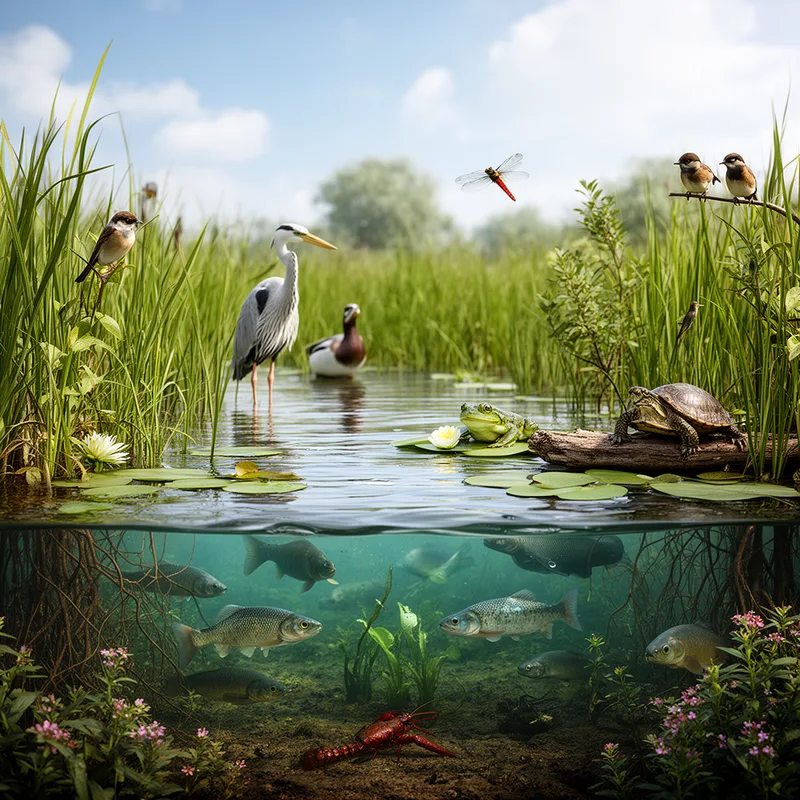
A group of plants, animals, and other living things that live in the same place and depend on each other
Surface Forms
Etymology
Biota comes from the Greek word bios, meaning 'life', and is the same root you see in biology or the prefix bio-. So biota is an easy way to say all the living plants and animals in a particular place.