
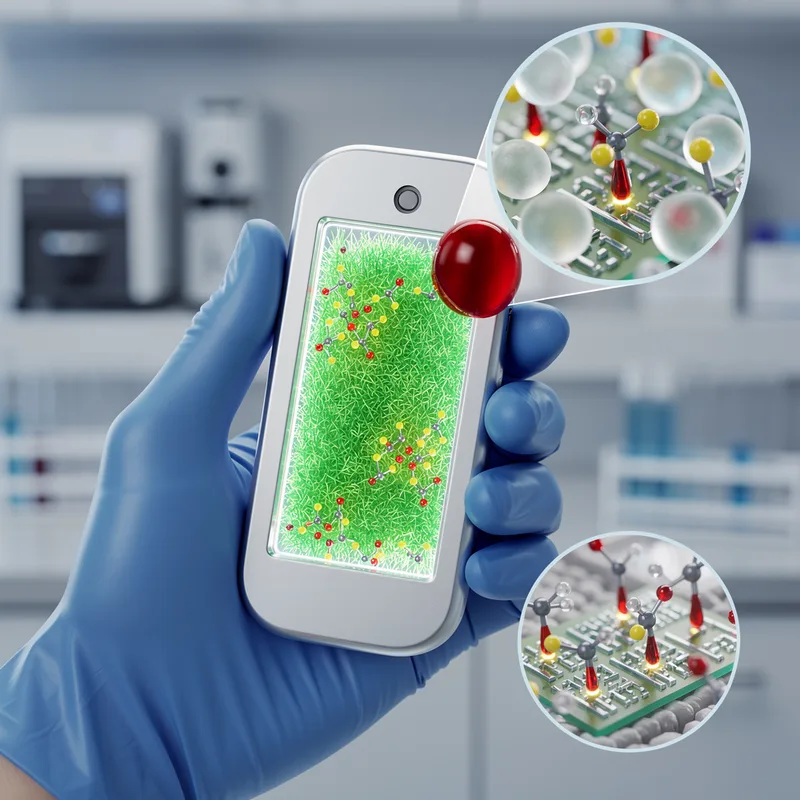
biosensor
 1
4.6
1
4.6

- noun
- /ˈbaɪoʊˌsɛndər/
- Specialized
- The new biosensor developed by researchers can detect glucose levels in real-time, providing valuable data for diabetic patients.
Examples
-
Arrays of surface-bound biomolecules find applications in biosensors, chromatography, diagnostic immunoassays, cell culturing, DNA microarrays, and other analytical procedures.
Academic text (2001) -
And finally, the human endometrium also acts like a biosensor for embryo quality.
-
In situ and other biosensors now being designed may provide new insights into an age-old problem that today has become a major coastal issue.
Academic text (2003) -
While the researchers have not done this yet, they have successfully used the resonator as a biosensor to detect proteins in a sample at a very low concentration, thereby proving its sensitivity.
Blog text (4) -
More than 50 participants discussed new ways of monitoring and detecting harmful algal blooms with novel biosensors.
Academic text (2003) -
That's enough energy to power a range of nanometer-scale defense, environmental, and biomedical applications, such as biosensors implanted in the body or environmental monitors.
Academic text (2008) -
Scientists are testing a biosensor that uses enzymes to measure harmful substances in drinking water.
-
This innovative biosensor allows doctors to monitor patient vitals remotely, leading to faster medical responses.
Synonyms
 898
3.4
898
3.4
A device that notices heat, light, pressure, or movement and sends a signal
A very small device that detects physical or chemical changes and makes an electric signal
How Sensitive
- Specialized
1
4.6

- Specialized
189
3.5
Surface Forms
Morphology
Etymology
Biosensor joins bio- meaning 'life' and sensor, like the common word 'sense' meaning 'to feel' or 'detect'. So a biosensor is a device that uses living parts to 'sense' and measure substances, which is why we use them for medical tests and to find bacteria.