
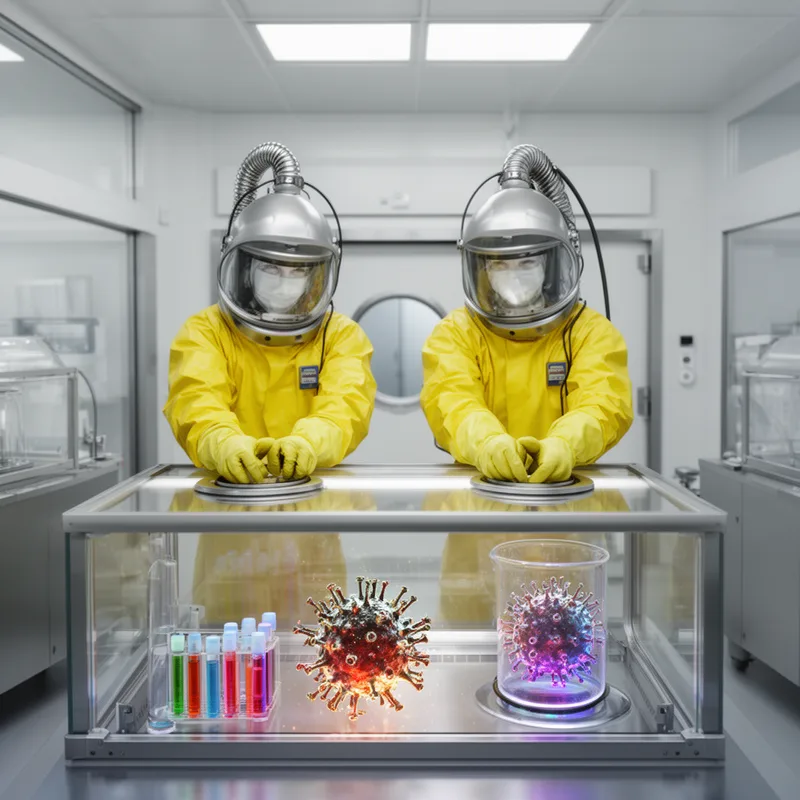
biosafety level 4
- noun
- /ˈbaɪoʊˌseɪfti ˈlɛvəl fɔr/
- Specialized
- Very few countries have operational biosafety level 4 labs due to the extreme risks involved.
- biosafety level 4 lab
Examples
-
The laboratory operates under strict biosafety level 4 protocols.
-
Strict protocols are enforced at all times in facilities designated as biosafety level 4.
-
The research on Ebola virus can only be conducted in a biosafety level 4 laboratory.
-
Researchers must follow biosafety levels 4 guidelines carefully.
-
The researchers at the new biosafety level 4 lab are the first to study the virus that has no known vaccine.
-
In a biosafety level 4 facility, scientists must wear specialized suits to prevent exposure to deadly pathogens.
-
Only highly trained personnel are allowed to enter the biosafety level 4 lab, where they handle extremely dangerous infectious agents.
How Hazardous
- Specialized

- Specialized
- Specialized
- Specialized
Surface Forms
Morphology
The phrase is directly compositional: it denotes the biosafety regime (biosafety) at the fourth numbered stage (level 4), so a learner who knows 'biosafety', 'level', and the numeral '4' can infer it refers to the fourth/very high stage of protective protocols. This numeric ranking pattern (noun + level + number) is a common and cross-linguistically transparent compositional structure, so the overall meaning is derivable from the parts.
Etymology
Biosafety level 4 names the highest safety category for labs. The word biosafety means protection against very dangerous living germs, and level 4 shows it is the top level with the strictest rules, strongest suits and most careful work, so it refers to the extra-strong precautions used when scientists handle viruses that have no vaccine.

