
biogeochemistry


 1
8.8
- noun
- /ˌbaɪoʊdʒiːoʊˈkɛmɪstri/
- Specialized
- His research has addressed plant-herbivore interactions, landscape and erosional controls over biogeochemistry, climate impacts on vegetation dynamics, soil processes and carbon budgets, and disturbance (cultivation and fire) effects on ecosystem processes.
- biogeochemistry of ecosystems
- biogeochemistry driven by climate
- global biogeochemistry
Examples
-
Of the many organisms that modify their environments, beavers influence channel morphology and biogeochemistry so dramatically that they inspired the paradigm of the "ecosystem engineer" (Jones et al. 1994).
Academic text (2010) -
Long-term research has documented changes in hydrology and lake biogeochemistry driven by climate trends and events such as droughts (Magnuson et al. 2006).
Academic text (2007) -
Changes in catchment land use and global biogeochemistry combine to produce global climate change, notably the greenhouse effect (Vitousek et al. 1997).
Academic text (2000) -
However, the massive changes in hydrology and biogeochemistry associated with land use in the YRLD have increasingly focused public attention on issues associated with persistent eutrophication.
Academic text (2007) -
A highly controversial issue in global biogeochemistry is the regulation of terrestrial carbon (C) sequestration by soil nitrogen (N) availability.
Academic text (2004) -
Similar biotic changes occurred in the urbanizing agricultural region, where human-caused changes in hydrology and biogeochemistry had conspicuous effects.
Academic text (2007) -
His research interests include a focus on the broad-scale influences of global change on terrestrial ecosystems, especially on how human activities affect the biogeochemistry of those ecosystems.
Academic text (2006) -
Because the presence of liquid water remains the primary limiting condition for life in Antarctica (Kennedy 1993), subtle differences in climate have profound effects on the productivity, biogeochemistry, and biodiversity of the dry valleys (Fountain et al. 1999).
Academic text (1999) -
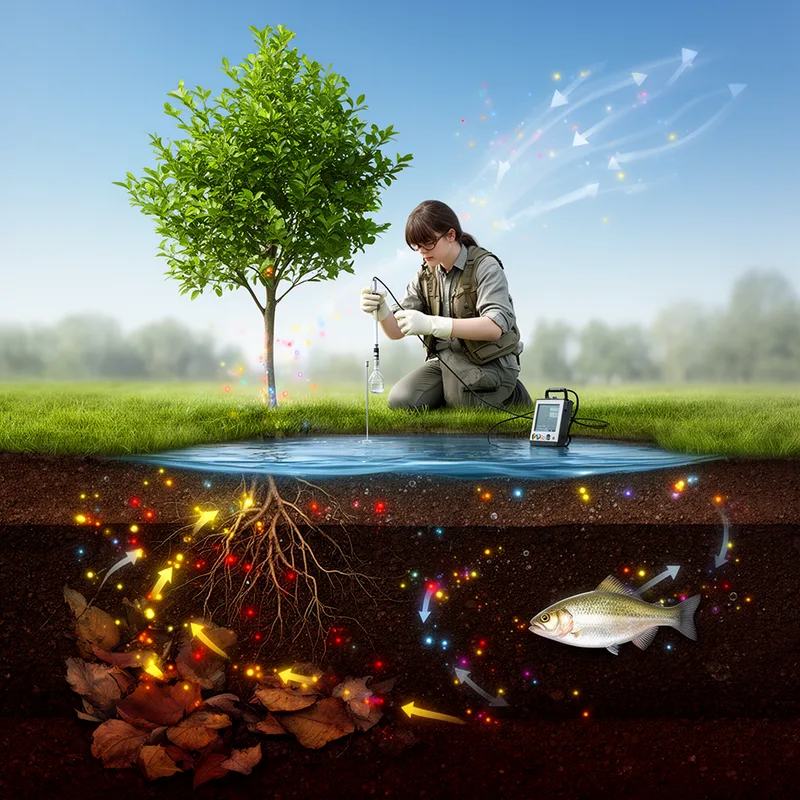
The study of biogeochemistry helps scientists understand how living organisms interact with their environment at a chemical level.
-
Recent developments in biogeochemistry reveal how pollutants affect soil health and plant growth.
Surface Forms
Morphology
Etymology
Biogeochemistry joins bio- 'life', geo- 'earth', and chemistry, like in biology and geography. So biogeochemistry is the study of the chemicals and nutrients that move between living things and the earth.