
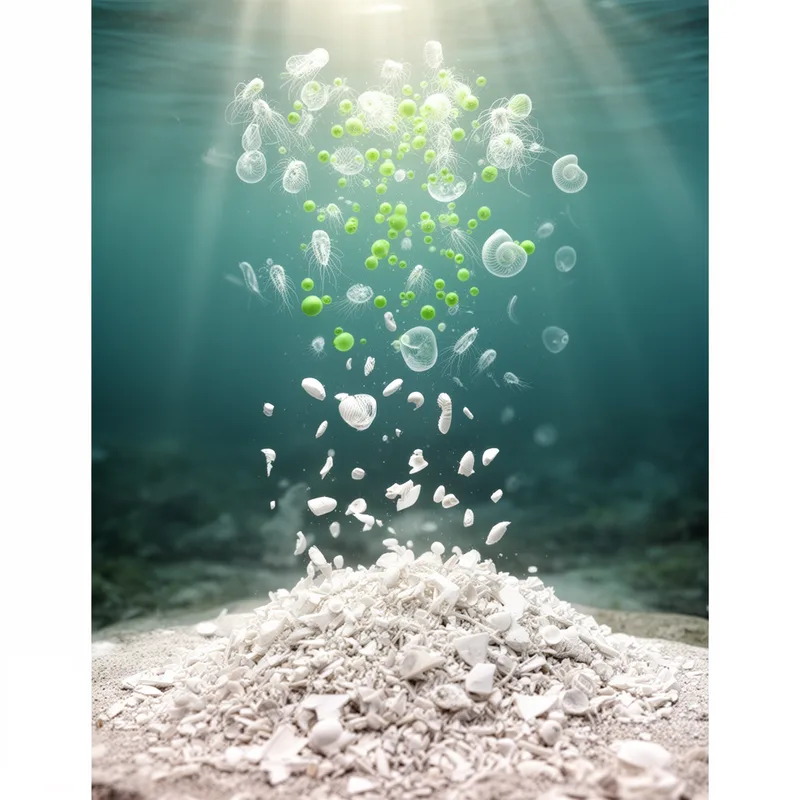
biogenous
- adjective
- /baɪˈɒdʒənəs/
- Specialized
- Many marine sediments are biogenous in origin, containing remains of organisms like algae and plankton.
Examples
-
Calcium carbonate in chalk is a biogenous sediment formed by the accumulation of shell fragments.
-
Scientists study biogenous deposits to understand past life forms and environmental changes.
-
Coral reefs are made of biogenous materials.
-
Most biogenous sediments are formed from the remains of marine life.
-
Many marine sediments are biogenous in origin, containing remains of organisms like algae and plankton.
-
Calcium carbonate in chalk is a biogenous sediment formed by the accumulation of shell fragments.
-
Most biogenous sediments are formed from the remains of marine life.
Synonyms
 5
7.7
5
7.7

Made by living things or needed for life processes


 1
4.4
1
4.4
Made from plants or other living things, not from oil
How Biological
- Specialized

- Specialized
1
6.7
Surface Forms
Morphology
biogenous = biogen (semi-transparent) = bio + gen + ous
The adjective is formed with the scientific combining form bio- and the suffix -ous, but the full meaning depends on a specialized classical derivation rather than everyday English.
Etymology
The word biogenous comes from bio- 'life' and -genous 'produced by', the same bio- as in biology and the same root you see in generate ('make'). So a biogenous material is literally 'produced by life', like sediments made from shells and tiny sea creatures.