
biochar
 2
7.5
2
7.5

- noun
- /ˈbaɪoʊˌtʃɑr/
- Specialized
- Farmers often use biochar to enhance the fertility of degraded soils.
- make biochar
Loading YouTube…
Watch on YouTubeOr you can burn biomass with a special method and catch the carbon in stuff called biochar.
- Or you can burn biomass with a special method and catch the carbon in stuff called biochar.
- For example, if one burns agricultural waste or wood in the absence of oxygen, this will not release all the carbon dioxide but produce a substance called biochar.
Examples
-
Plant growth experiments demonstrated that biochar application increased above-ground biomass yield in both switchgrass and sorghum by up to 25%.
Blog text (11) -
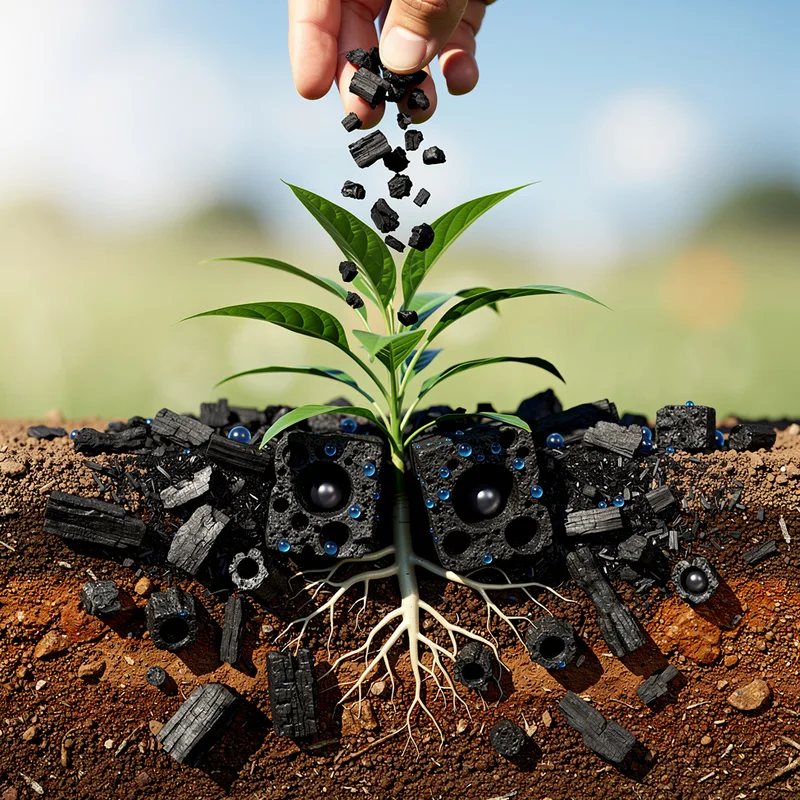
Biochar improves soil quality by helping retain moisture and nutrients for plants.
-
The company is working on finding buyers for its biochar.
Blog text (17) -
The review concludes that biochar does have potential for use in horticultural production, but more research is needed.
Blog text (34) -
Biochar production serves as a way for Cool Planet to sequester carbon emissions.
Blog text (17) -
Biochar in horticulture: Prospects for the use of biochar in Australian horticulture.
Blog text (34) -
Compositional analysis of sorghum grown in biochar-amended soil demonstrated that as the biochar application rate increased, the ash content of the plants increased.
Blog text (11) -
Research indicates that biochar can effectively filter pollutants from water sources.
Synonyms
 31
2.6
31
2.6
A black material made from burned wood used for fuel or drawing
How Effective

Surface Forms
Morphology
Etymology
Biochar joins bio- 'life' (as in biology) and char 'charcoal', so it literally means charcoal made from living plants. That is why biochar is burned plant material added to soil to help plants grow and to store carbon.