
bignoniaceous
- adjective
- /ˌbɪɡnəˈneɪʃəs/
- Specialized
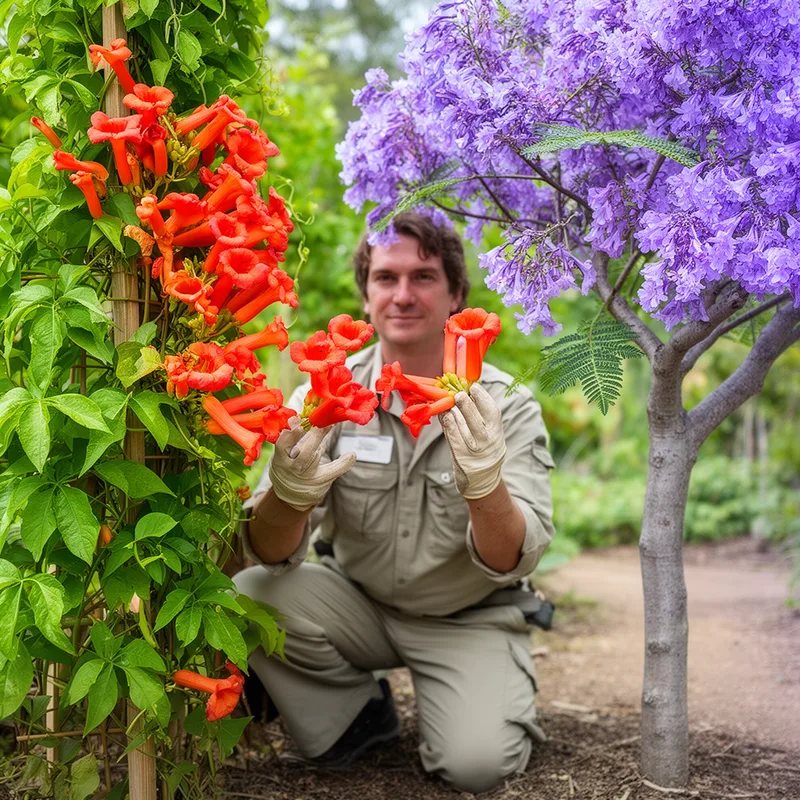
- The bignoniaceous trees in the park produced clusters of trumpet-shaped flowers.
Examples
-
Some bignoniaceous species are popular as ornamental plants in warm climates.
-
Botanists collected samples of bignoniaceous vines from the rainforest for further study.
-
The bignoniaceous plants thrive in warm climates.
-
Many gardeners love bignoniaceous species for their vibrant flowers.
-
Many gardeners love bignoniaceous species for their vibrant flowers, which attract various pollinators.
-
Some bignoniaceous species, like the trumpet vine, are frequently used in landscaping for their striking appearance.
-
The bignoniaceous trees in the botanical garden are known for their impressive clusters of trumpet-shaped flowers.
Surface Forms
Morphology
bignoniaceous = Bignonia (opaque) = Bignonia + aceous
The word is a taxonomic adjective built from the genus name Bignonia plus the adjective-forming suffix -aceous, but the specialized botanical meaning is not recoverable for most learners.
Etymology
The word bignoniaceous comes from the plant name Bignonia, which was named for a man called Bignon. These plants often have trumpet-shaped flowers, so bignoniaceous simply means 'like the Bignonia family', for example trumpet vines and jacarandas.

