
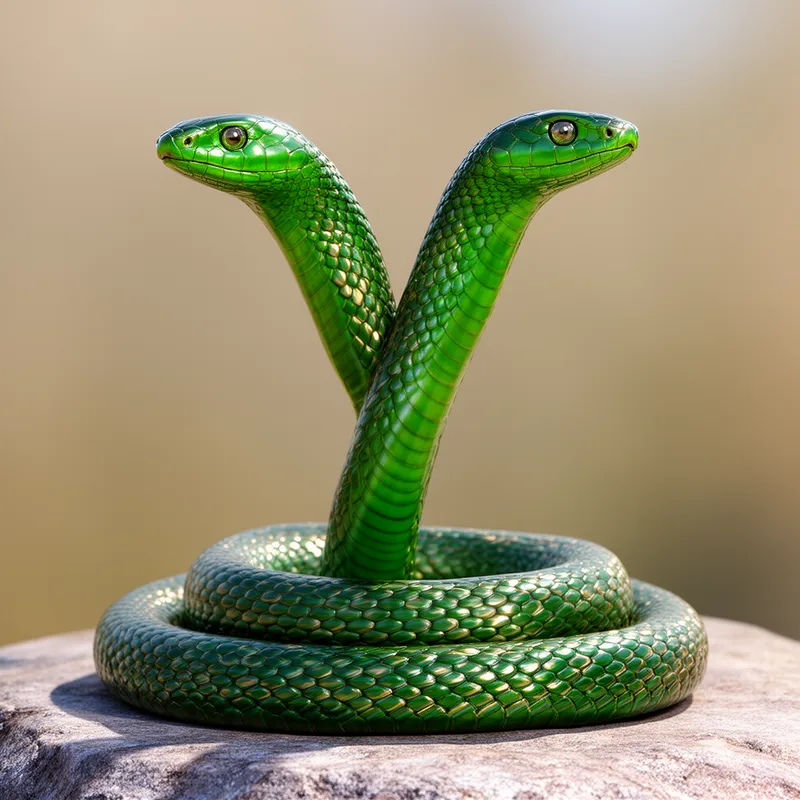
bicephalous
- adjective
- /ˌbaɪˈsɛfələs/
- Specialized
- Some rare animals are born bicephalous, an unusual biological phenomenon.
Examples
-
The ancient statue depicts a bicephalous deity watching over the temple.
-
In mythology, the bicephalous serpent is often considered a symbol of duality.
-
The bicephalous creature fascinated the scientists.
-
Is a bicephalous organism common in nature?
-
In mythology, the bicephalous creature represents the concept of duality in its two heads.
-
Some rare species can be bicephalous, making them a fascinating subject of study for biologists.
-
The artist created a painting of a bicephalous figure, symbolizing the conflict between two minds.
Synonyms
Having two heads or two parts that look like heads
How Headed
- Specialized

- Specialized
Surface Forms
Morphology
bicephalous = bicephal (semi-transparent) = bi + cephal + ous
The prefix 'bi-' clearly signals 'two', but 'cephal' is a Greek combining form (not a familiar standalone English word), so the formation is only partially transparent to average learners.
Etymology
Bicephalous is made from bi- meaning 'two' and cephal- meaning 'head', and you can see the same bi- in bicycle. So bicephalous literally means 'two-headed', which is why we use it for animals, statues, or pictures that have two heads.

