
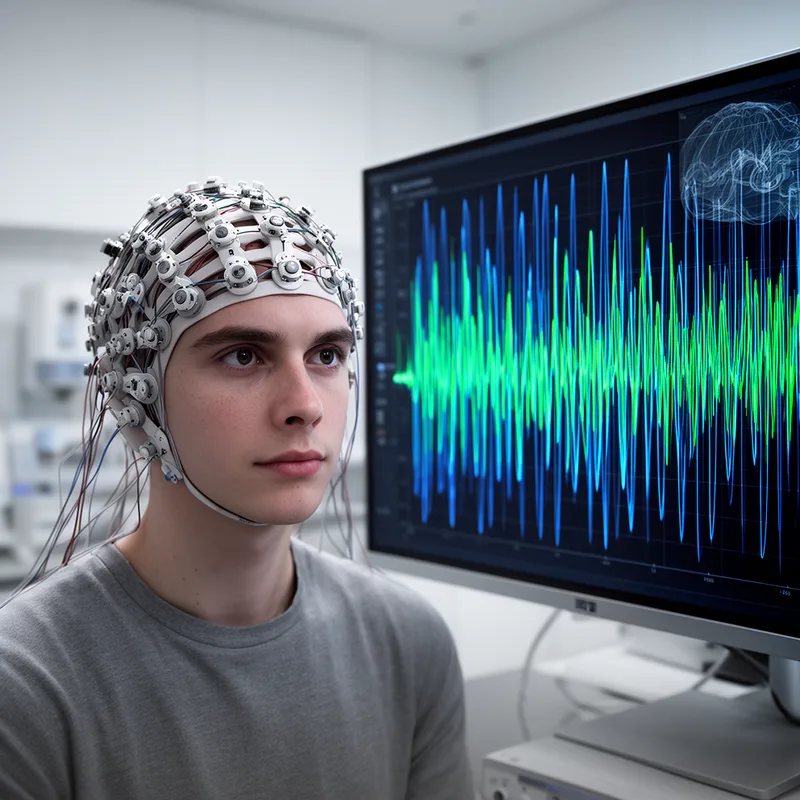
beta rhythm
- noun
- /ˈbeɪtə ˈrɪðəm/
- Specialized
- During meditation, the beta rhythms may decrease.
Examples
-
The beta rhythm is most prominent when a person is focused and alert.
-
Doctors noted a decrease in beta rhythm activity during the patient's drowsy state.
-
Researchers use electroencephalograms to measure the presence of beta rhythm in different mental conditions.
-
The beta rhythm indicates that the brain is active.
-
The scientist measured the patient's beta rhythm to assess their alertness and cognitive function during the study.
-
During the EEG test, the technician observed a strong beta rhythm, indicating that the participant was awake and focused.
-
Understanding how to enhance beta rhythm can be beneficial for improving concentration and mental clarity.
Synonyms

 1
5.1
1
5.1

A fast brainwave that appears when you are awake and thinking
How Fast
- Specialized

- Specialized
- Specialized
- Specialized
Surface Forms
Morphology
The compound pairs 'beta' (a label/name) with 'rhythm' (a pattern), so a B1 learner who knows both words can infer this refers to a particular named pattern. However, recognizing that it specifically denotes brainwave activity at 12–30 Hz and its association with an awake, alert state requires domain-specific knowledge about EEG conventions and frequency bands, so the meaning is not fully predictable from the parts alone.
Etymology
Beta rhythm gets its name from a simple image: researchers used Greek letters to name different brain waves, and the faster beta waves look like a steady rhythm on an EEG screen. So, beta rhythm means the repeating brainwave pattern you see when someone is 'awake and alert'.