
beta iron
- noun
- Specialized
- The transition from beta iron to gamma iron occurs at 906°C.
Examples
-
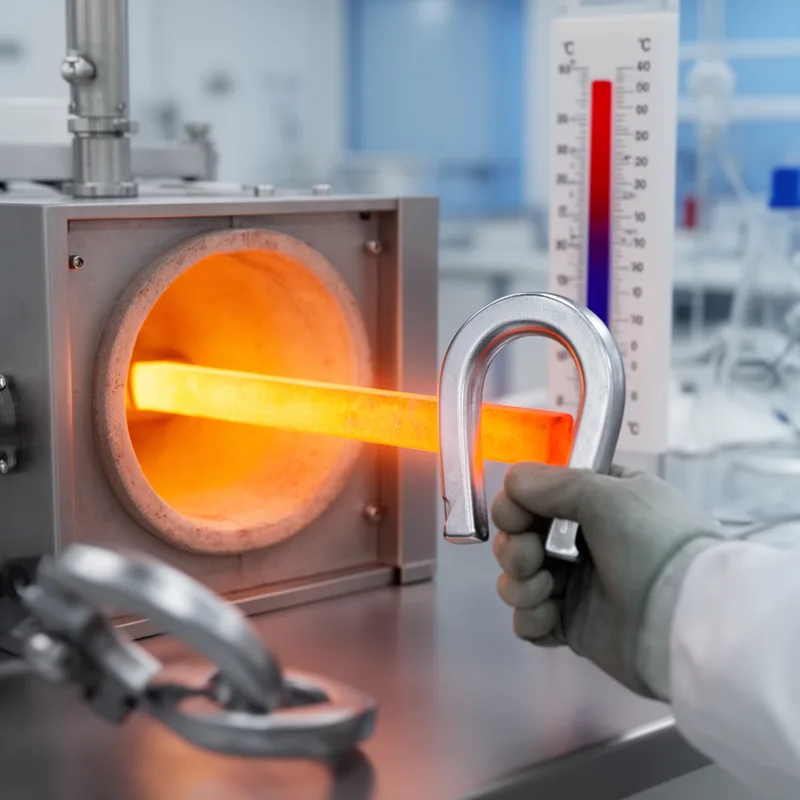
Above the Curie temperature, beta iron loses its magnetic properties.
-
In metallurgy, beta iron is known for its nonmagnetic properties.
-
Materials scientists study beta iron to understand its structural changes at high temperatures.
-
The beta iron phase is crucial for understanding steel properties.
-
Materials scientists study beta iron to understand its structural changes at high temperatures.
-
The transition from beta iron to gamma iron occurs at 906°C.
-
In metallurgy, beta iron is known for its nonmagnetic properties.
Antonyms

Surface Forms
Morphology
beta + iron
The phrase is partly compositional: 'iron' clearly names the metal and 'beta' functions as a label for a variant, so a learner who recognizes 'beta' as 'second/form' could infer this is a particular form of iron. However, the specific technical properties (nonmagnetic behavior and narrow temperature stability) are domain-specific and not derivable from the constituents alone, and many B1 learners will not know 'beta' as a phase-label, so the meaning is only partially predictable.
Etymology
Beta iron comes from scientists who used Greek letters to name different forms of iron at different temperatures. They called the middle form beta, so beta iron means the beta (middle) form of iron that becomes 'not magnetic' at high heat.

