

beta-lactamase
- noun
- /ˌbeɪtəˈlæktəˌmeɪs/
- Specialized
- In view of the mixed flora that cause PTA and the increasing number of beta-lactamase-producing microorganisms, the use of antibiotics active against beta-lactamases has become more popular in clinical practice.
- produce beta-lactamase
Examples
-
Indeed, in the United States, almost all M catarrhalis and at least 33% of H influenzae isolates produce beta-lactamase, which undermines the empiric use of drugs such as amoxicillin.
Academic text (2003) -
Certain bacteria produce beta-lactamase to break down penicillin, which makes them resistant to antibiotics.
-
In 1991, Brook et al. published a study of 25 PTA specimens and reported that 13 (52%) grew beta-lactamase-producing organisms.
Academic text (2005) -
In view of the mixed flora that cause PTA and the increasing number of beta-lactamase-producing microorganisms, the use of antibiotics active against beta-lactamases has become more popular in clinical practice.
Academic text (2005) -
The bacteria that predominate in sinusitis can resist penicillin by producing beta-lactamase or by altering sites of penicillin binding.
Academic text (2003) -
The presence of beta-lactamase can complicate the treatment of bacterial infections by neutralizing penicillin.
-
Testing for beta-lactamase production is important to determine the most effective antibiotic for treatment.
Synonyms


 1
8.0
1
8.0
A protein some bacteria make that destroys penicillin and similar antibiotics
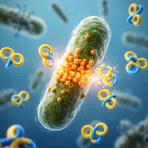
An enzyme made by some bacteria that destroys penicillin
Surface Forms
Morphology
Etymology
Beta-lactamase breaks into three parts: beta, a Greek letter meaning 'second', lactam, a chemical name built from lact- meaning 'milk' as in lactose, and -ase, a common ending that means 'enzyme'. So beta-lactamase is an enzyme that breaks down beta-lactam antibiotics like penicillin, which is why bacteria that have it are resistant to those drugs.