
berserk
 7
9.9
7
9.9

- noun
- /bərˈzɜrk/
- Archaic
- Ian goes berserk, leaping out at Danny like an enraged lion.
- go berserk
Examples
-
Although King Adils encourages the struggle between Svipdagr and the berserks at his court, King Hrolfr makes an effort to arbitrate between them and thus keep the peace.
Academic text (1999) -
The berserk warriors charged into battle, howling like wild animals.
-
This prisoner became berserk in the isolation cell.
-
In the following passage, I'll ask of the berserks, you tasters of blood.
-
Edward rushes forward, berserk with rage, to hit Stuckey again.
Fiction book (1990) -
The audience of on-the-edge kids goes berserk, guzzling beer and slam dancing with frightening intensity.
Fiction book (1994) -
Every thirty years, our country goes a little berserk—as it did in the 1930s, in the 1960s, and now in the 1990s.
Academic text (1999) -
During the raid, the berserks displayed astonishing ferocity, overpowering their opponents.
-
Legends tell of a berserk who fought with such madness that he feared no enemy.
Synonyms
 8
9.9
8
9.9
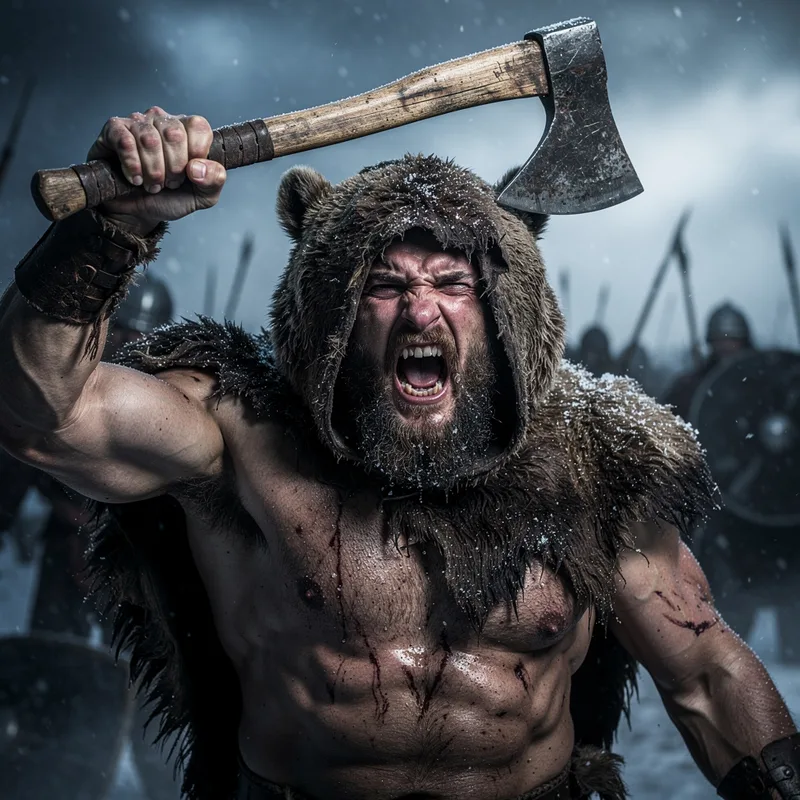
A warrior in old Norse stories who fights with wild, uncontrolled rage
Surface Forms
Etymology
Berserk comes from Old Norse berserkr, probably meaning 'bear-shirt', a name for a warrior who wore a bear skin and fought like a wild bear. That's why a berserk was a fighter who went into a fierce, fearless rage.