
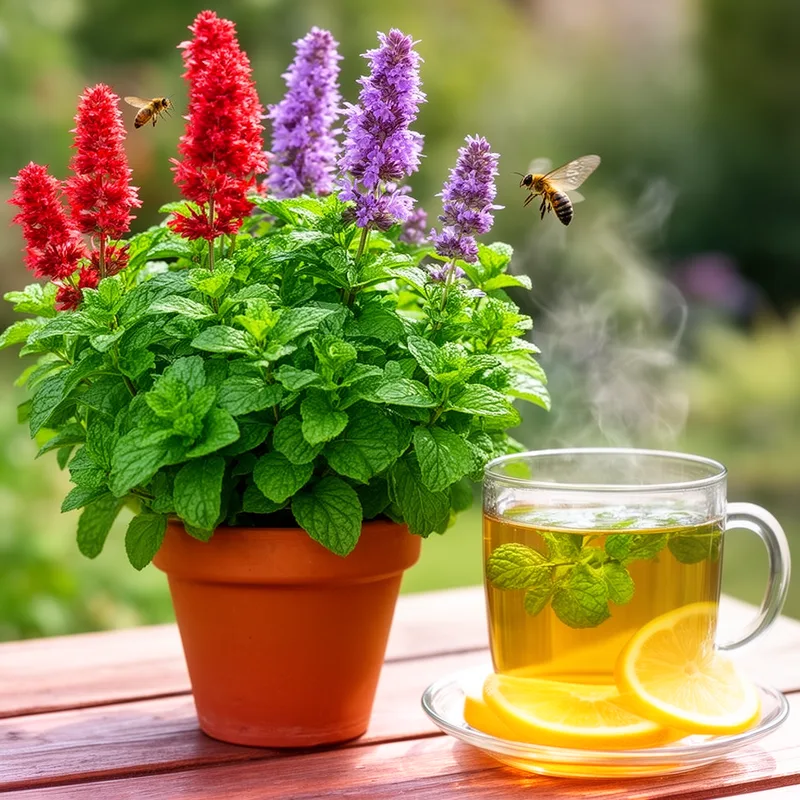
bergamot mint
- noun
- /ˈbɜrɡəˌmɒt mɪnt/
- Many herbal teas contain bergamot mint for its refreshing, citrus-floral aroma.
Examples
-
Pollinators like bees and butterflies are attracted to bergamot mint during the summer months.
-
The garden was filled with bergamot mint blooming in shades of red and lavender.
-
I love the smell of bergamot mint in my garden.
-
Have you tried bergamot mint tea before?
-
Many herbal teas contain bergamot mint for its refreshing, citrus-floral aroma.
-
Have you tried bergamot mint tea before?
-
Pollinators like bees and butterflies are attracted to bergamot mint in the summer.
Synonyms
A mint plant whose leaves smell like bergamot orange

A mint plant with leaves that smell of fresh citrus and that people use in cooking and for scent
Surface Forms
Morphology
The phrase is a straightforward noun–noun compound where 'bergamot' specifies the scent/source and 'mint' names the plant; a learner who knows both words can infer it is a mint with bergamot-like aroma. This compositional structure is common and predictable cross-linguistically, so the overall meaning is directly derivable from the constituents.
Etymology
The name bergamot mint comes from its smell: bergamot is the name of a citrus fruit and mint is the herb, so the name describes a mint that smells like a citrus. That's why bergamot mint now means a mint plant with a fresh, orange-like scent often used in teas and potpourri.

