
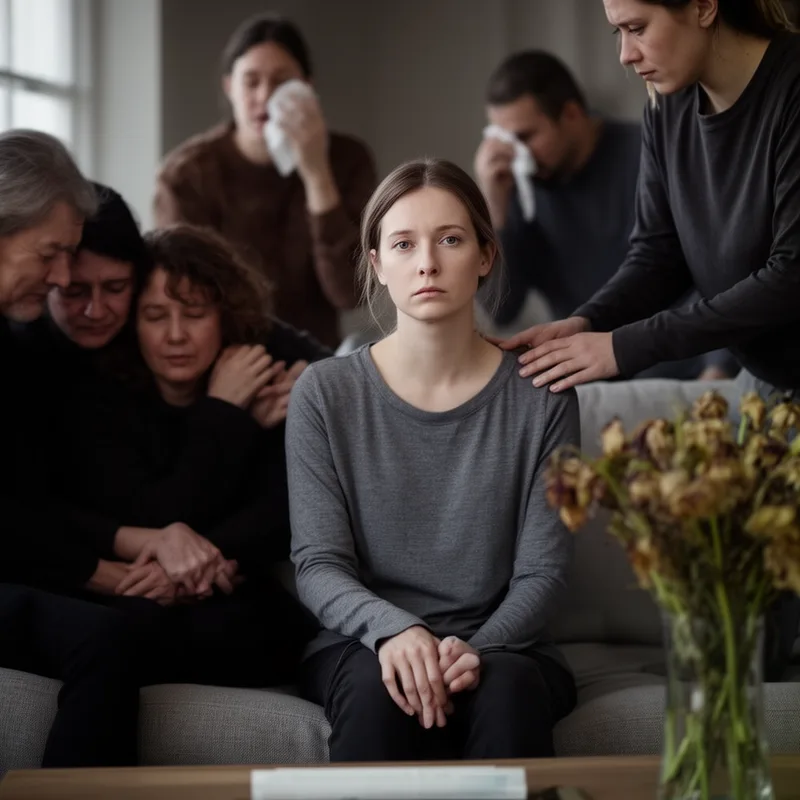
to benumb


 1
8.5
1
8.5
- verb
- /bɪˈnʌm/
- He went straight to the dining room, without taking his shoes off, sat down, wiped his thick glasses and vast forehead with a handkerchief, while Mother and I watched him, benumbed.
Examples
-
And the three P90 Shippen girls, as well as their mother, sat benumbed as they listened to him.
Fiction book (1994) -
I lay on the floor, benumbed, next to my dead and rotting comrades, thinking, like a child slowly falling into a deep sleep:
Fiction book (1990) -
But so benumbed was I, so exhausted, that I hesitated to take it.
Fiction book (1992) -
The very notion of violent reprisal benumbs them.
-
That was his windward side, so presumably it was benumbed in the onslaught of air.
Fiction book (1991) -
Benumbed by fatigue and alcohol, logic had been squelched and other, more chaotic forces seemed to romp unfettered.
Fiction book (1990) -
This legacy caused the colonel—until that moment benumbed by his experiences—to weep and to remember all the kindnesses done to him by Tomas, and then to think that perhaps the old man, too, had played a part in what had happened.
Fiction book (2002) -
The freezing wind benumbed my fingers, making it difficult to hold the pen.
-
After hearing the devastating news, she felt benumbed and unable to express her emotions.
-
The extreme cold benumbed my senses, leaving me feeling numb all over.
Synonyms
 62
4.2
62
4.2
Make a body part and the mind unable to feel, often by cold or medicine
 33
3.4
33
3.4
Cause something to become less sharp, strong or bright
 21
4.2
21
4.2
To make a feeling or pain less strong
 10
6.3
10
6.3
To make people and animals feel less strong reactions to pain, fear or loud sounds, often by repeated exposure
Antonyms


How Numb
1
8.5
 62
4.2
62
4.2
Surface Forms
Morphology
Etymology
The word benumb is made from the prefix be- meaning 'make' and the old word numb meaning 'without feeling'. So, to benumb someone is to make them lose feeling, either in the body or in their emotions.