
belting
 1
5.5
1
5.5

- noun
- /ˈbɛltɪŋ/
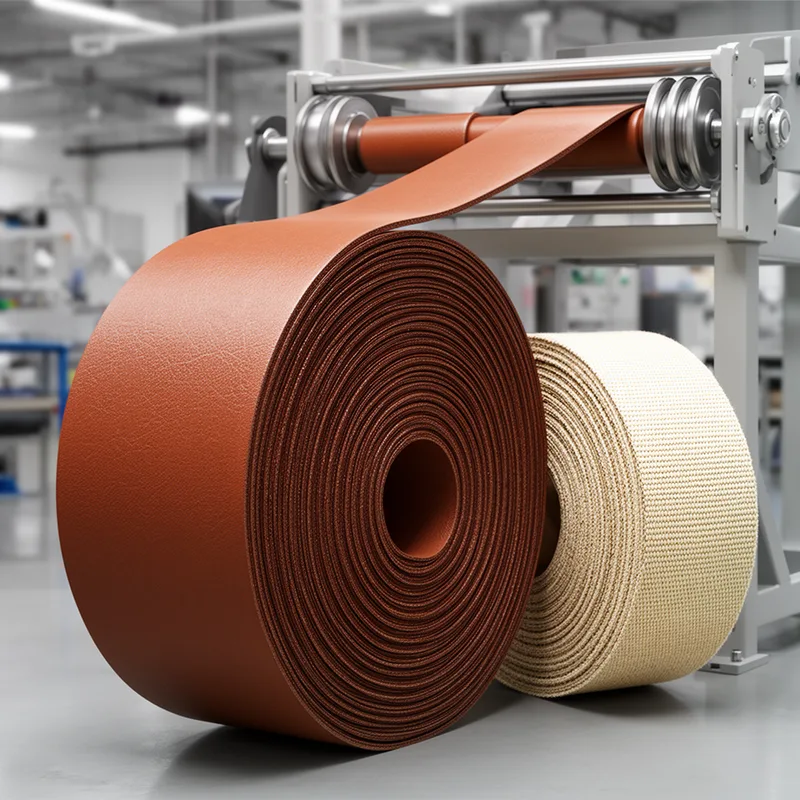
- Many types of belting can be used in manufacturing, including those made from synthetic materials.
Examples
-
This helps avoid damage to the pulley, belting, or mechanical belt splices, and solves resultant mistracking problems.
Academic text (2003) -
Contrast that with belt conveyors that rely on a return circuit of belting.
Academic text (2002) -
So we are remaking our belts for the lathe.
-
The verses showcase her lower range, which is robust and warm, while the chorus gives way to some Carrie Underwood-style belting, all very well done.
Blog text (4) -
The factory replaced its old machinery with new equipment that uses durable belting for efficient operation.
-
He preferred to wear a sturdy leather belting that complemented his work attire.
Synonyms
 2
4.9
2
4.9
A strong woven strip of cloth used for straps and belts
Surface Forms
Morphology
Etymology
Belting comes from belt, which originally meant a 'band' or 'strap' used to fasten clothes around the waist. So belting is the strong, flexible material made for those straps and for the long bands that move parts in machines, which explains the modern meaning.