

belowground
- adjective
- /bɪˈloʊˌɡraʊnd/
- Ecologists have a far better knowledge of aboveground than belowground organisms, yet a large proportion of global diversity exists below ground.
- belowground diversity
- belowground organisms
- belowground taxa
Examples
-
For example, belowground herbivory can equal or exceed aboveground herbivory in effects on plant production.
Academic text (2000) -
Fire can also influence belowground carbon stocks.
Academic text (2011) -
Functioning sought to address such questions about relationships between aboveground and belowground diversity.
Academic text (2000) -
Similar to aboveground plants and animals, belowground organisms are also vulnerable to shifts in winter climate.
Academic text (2012) -
The rapid increase in belowground biomass is highly desirable for bare restoration sites.
Academic text (2001) -
If this belowground herbivory reduces dominance by strongly competitive species, it could increase plant diversity.
Academic text (2000) -
Total biomass was higher for sextets because belowground biomass increased with species richness.
Academic text (2001) -
Comprehensive comparisons of diversity in aboveground and belowground taxa are almost entirely lacking.
Academic text (2000) -
Diversity in one compartment causes diversity in the other, so that biotic richness is correlated between aboveground and belowground compartments.
Academic text (2000) -
Ecologists study belowground habitats to understand how many different organisms live under the soil.
Synonyms

 327
3.0
327
3.0

Beneath the surface of the ground, under soil or rock
 20
7.4
20
7.4
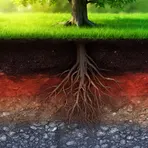
Under the earth's surface
 16
4.0
16
4.0
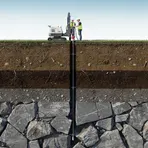
Under another thing, often below the surface
 6
6.3
6
6.3
Under the ground or below the top layer of a place

Existing under the surface of the earth, like pipes or caves

Found under the ground and out of sight
How Deep
 327
3.0
327
3.0
Surface Forms
Morphology
Etymology
Belowground is made of below ('under') and ground ('earth'), so it literally means 'under the ground'. This is why we use it for things that are situated or happen beneath the surface of the ground.