

beef tea


 1
7.7
1
7.7
- noun
- /biːf tiː/
- Archaic
- After surgery, she was given beef tea as a nourishing liquid to aid her healing.
Examples
-
For the first time, I noticed the smell of strong beef tea and saw the cups of custard cooling by the kitchen window.
Fiction book (1997) -
If anybody said that I should die if I did not take beef tea or mutton, even under medical advice, I would prefer death.
Blog text (20) -
If a vegetarian became ill and a doctor prescribed beef tea, then I would not call him a vegetarian.
Blog text (20) -
On the fifth day, the boiling pot of the sea subsided, and I began to take beef tea and resolve to live.
Blog text (22) -
Sometimes she made special things for Mrs. Kovaks, like beef tea or custard, then pretended she'd fixed them for everybody else.
Fiction book (1990) -
The doctor recommended that I drink a warm cup of beef tea to help with my recovery.
-
He found beef tea to be a comforting drink during his illness, providing both warmth and nourishment.
Synonyms
 1
1.9
1
1.9
A clear liquid made by slowly cooking beef and vegetables in water, used for soups and sauces
 1
8.8
1
8.8
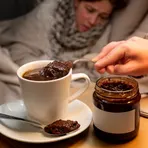
A thick beef paste used to add rich flavour to food or as a warm drink when ill
Surface Forms
Morphology
beef + tea
The meaning—a clear liquid extract made from beef—is compositionally built from 'beef' (meat) + 'tea' (a drink), analogous to transparent noun+tea compounds like 'lemon tea' or 'mint tea'. Because it is literal and non‑metaphorical, a B1 learner who knows the constituent words can reasonably infer the MWE's meaning.
Etymology
Beef tea comes from the simple idea of making a tea from beef: cooks slowly cooked meat in water until a clear, warm broth was made. Because doctors often gave this drink to sick people as 'nourishment', the name now means that clear meat broth used to help the ill.