

beaver
 26
1.0
26
1.0

- noun
- /ˈbiːvər/
- Although less quantified than deposition, beaver-induced erosion also shapes the fluvial corridor.
- beaver dam
- beaver pond
- beavers create
Loading YouTube…
Watch on YouTubeAnd a bee builds hives, a Beaver builds dams.
- And a bee builds hives, a Beaver builds dams.
- All right, You're going to tell me that a band of Beavers building a dam isn't cool?
- R.E.M.'s Everybody Hurts dressed, dressed as like a Beaver.
Examples
-
I'm looking for a beaver dam behind those woods.
-
Potential problems include the possibility that the beavers will interfere with logging and fishing.
Academic text (2001) -
An outstanding characteristic of a beaver is the large, flat tail.
-
Therefore, the following discussions consider the potential impact of beaver dams on processes at this scale.
Academic text (2010) -
Another concern is that the presence of the beavers may overstress habitats vital to other species.
Academic text (2001) -
Hiking trails lead into the wilderness where one will find streams, beaver ponds, meadows, trees, and rocks.
Academic text (2001) -
We hypothesize that the net impact of recent beaver colonization is the accumulation of sediments.
Academic text (2010) -
One can find black bears, moose, beavers, and white-tailed deer, as well as hundreds of migrating birds.
Academic text (2007) -
Under modern conditions, beaver dams create dynamic sequences of ponds and wet meadows among free-flowing segments.
Academic text (2010) -
While hiking in the forest, we saw a beaver building a dam by the riverbank.
Idioms


Compounds

- Informal
3
6.1
A person who is very willing to do extra work and works harder than others



- Australian
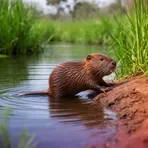
A small animal from Australia and New Guinea that lives in water and looks like a beaver

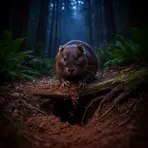
A large rodent active at night that digs burrows in forests on the Pacific coast of North America

A large animal from North America that lives near water, builds dams, and has a wide flat tail

A large water rodent from Europe and western Asia different from the North American beaver
How Big

Surface Forms
Etymology
Beaver comes from an old German word and is the same animal name as German Biber and Dutch bever, meaning the large water rodent with a flat tail that builds dams, which is why the word today names that animal.