

to beard
- verb
- /bɪrd/
- Archaic
- Colorful flowers beard the edge of the old garden fence.
Examples
-
The trees beard the edge of the cliff.
-
A low wall bearded the circular plaza, enclosing it from all sides.
-
Small pine trees bearded the ridges of the valley.
-
The mountains beard the horizon beautifully.
-
The old castle was bearded by thick vines that clung to its walls.
-
The cliffs were bearded with lush greenery, perfectly outlining their rugged edges.
-
The ancient oak tree was bearded by moss, softening its gnarled bark.
Idioms

- Informal


 1
9.9
1
9.9
To confront a powerful person directly in their own place
Compounds


- Specialized
A thin sea animal that lives in a tube on the deep ocean floor and has tentacles


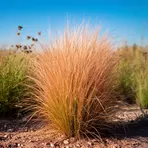
A tough grass from North America with leaves that turn pale bronze in autumn

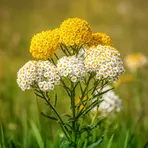

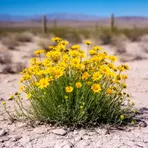
An annual plant with yellow flowers that grows in dry parts of the southwestern United States and Mexico
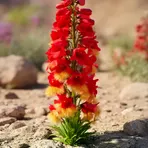
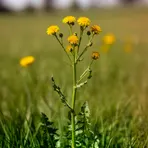
A plant with long groups of bright red flowers and yellow hairs on the lower part of the flower

- Archaic
A small narrow patch of chin hair shaped into a short point like an emperor's style

A small evergreen shrub with silvery leaves and pale yellow flowers often grown in gardens

Thick sideburns that grow down the cheeks and join along the jaw, with no mustache


- Specialized
A pale greenish-gray growth with long hairlike strands that hang from tree branches


How Close

Surface Forms
Etymology
Beard used to mean 'to border' comes from the picture of hair along the edge, like a beard around a face, so things that 'beard' an edge form a fringe or rim. So if plants or a wall 'beard' a path, they run along its border like a beard around a chin.