
bean tree
- noun
- /biːn triː/
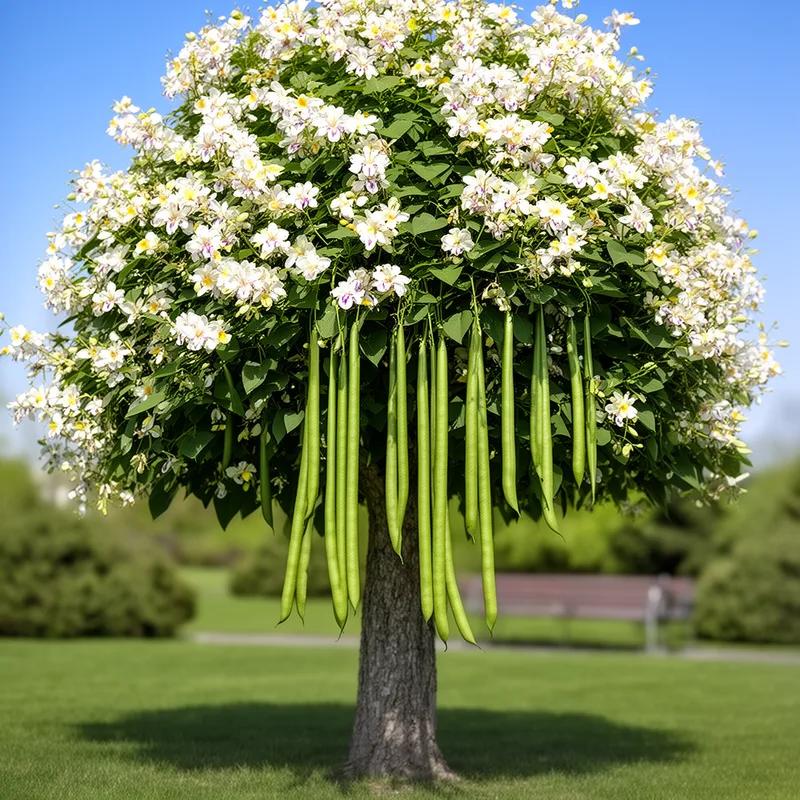
- The catalpa is a well-known bean tree with showy flowers and long seedpods.
Examples
-
The bean tree grows tall and provides shade.
-
The bean trees in this region attract a variety of birds with their pods.
-
Many gardeners plant the bean tree for its ornamental appearance and shade.
-
Many bean trees are found in tropical climates.
-
The park was filled with the beautiful flowers of the bean tree, attracting many visitors each spring.
-
In the botanical garden, the tall bean trees stood out with their long seedpods and vibrant foliage.
-
Farmers often plant bean trees near their fields, as their pods provide a natural habitat for wildlife.
Synonyms

A large tree with heart-shaped leaves, white flowers and long thin seed pods

A tropical evergreen tree with long pods of soft white pulp you can eat

A small tree with bright red flowers and red seeds with black spots

A shrub or small tree with divided leaves, blue flower spikes and red seeds, some poisonous to farm animals

A small Caribbean tree with purple flower clusters and bright black or red seeds often used for jewelry
Surface Forms
Morphology
The meaning 'a tree that has seedpods resembling beans' is directly and transparently derived from combining 'bean' (edible seed/pod) with 'tree' (a tall perennial plant). This noun–noun compounding pattern is common cross-linguistically and follows ordinary compositional semantics, so a B1 learner who knows both words would readily infer the meaning.
Etymology
The noun bean tree comes from a simple picture: people saw a tree that made long, bean-like seed pods and called it a bean tree. So today the name means 'a tree with seed pods that look like beans'.

