

bean-caper family
- noun
- Specialized
- The bean-caper family includes several plants that thrive in desert environments.
Examples
-
Guaiacum and Larrea are well-known genera within the bean-caper family.
-
Scientists are studying the medicinal properties of some shrubs in the bean-caper family.
-
The bean-caper family includes various species adapted to arid climates.
-
Did you know that the bean-caper family has some poisonous members?
-
Guaiacum and Larrea are well-known genera within the bean-caper family.
-
The bean-caper family includes several plants that thrive in desert environments.
-
Did you know that the bean-caper family has some poisonous members?
Synonyms

A group of small trees, shrubs, and herbs that grow in hot, dry, salty places
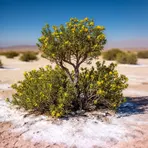
A group of flowering plants like small trees and shrubs that live in warm, dry, salty places
Surface Forms
Morphology
bean-caper + family
The structure 'X family' is a transparent taxonomic pattern so a learner who knows 'family' will infer this is a group of organisms called 'bean-caper' (i.e., a plant family). However, the constituent 'bean-caper' is a rare, specialized compound (not a straightforward combination of 'bean' + 'caper') and its specific botanical sense and properties cannot be derived from the parts. Thus the phrase is partly compositional (family = group) but the lexical head is not predictable, making it only partially transparent to B1 learners.
Etymology
Bean-caper family may come from a simple picture: some plants in this group have seeds that look like small beans, and other parts can smell or taste a bit like the pickled caper people eat. So people used that image to name this 'family of plants' that often grow in warm, dry places.

