
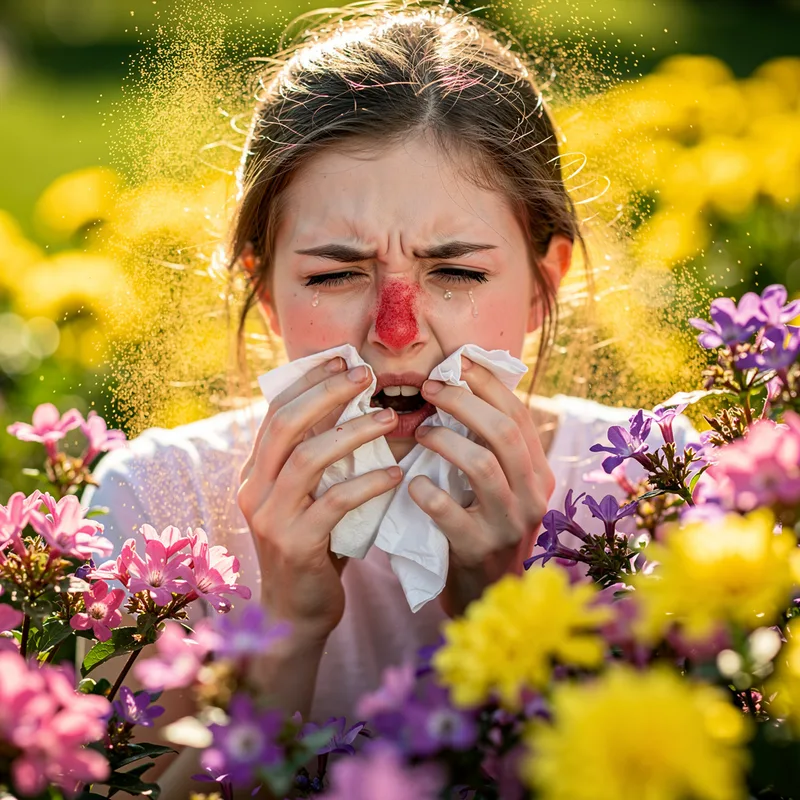
to be allergic to
 294
3.1
294
3.1

- phrasal verb
- /bi əˈlɜrdʒɪk tu/
- Many children are allergic to certain foods, which can cause serious health issues.
- be allergic to penicillin
- be allergic to latex
- people allergic to latex
Loading YouTube…
Watch on YouTubeAnd and he had a he was allergic to everything, man.
- And and he had a he was allergic to everything, man.
- Virtually no one is allergic to an egg yolk.
- You know how some people can have are allergic to certain foods, right?
- So what are the better analogies I can put out there for people who are allergic to bees?
- Think of for people who are allergic to dogs, scared of dogs, who simply don't like dogs.
- And you know, like I was allergic to milk as a baby and I, my mom just said that to me.
- What we were told by the GP was allergies or, or, or maybe she was allergic to something I was consuming in my breast milk.
- And I recently was at A at a basketball game and this woman said to me that she was allergic to her cats.
- They put a tube in there and the feed I was allergic to.
Examples
-
I'm allergic to cats.
-
It's just I'm allergic to nuts.
-
I thought you said you were allergic to dogs.
-
In fact, I may be allergic to them.
-
OK, You know many humans are allergic to cats, right?
-
But Mat is allergic to animals like dogs and cats.
-
Man, I'm allergic to cheese.
-
I think I'm allergic to the incense.
-
I'm surprised because a lot of people are allergic to fragrance in skin care.
-
Bernstein had long ago been informed that Nathaniel was allergic to grass and dust.
Fiction book (1995)
Antonyms

How Allergic

Surface Forms
Morphology
The meaning is compositionally predictable: 'be' + the adjective 'allergic' with the preposition 'to' simply indicates having a hypersensitive reaction to something, so a B1 learner who knows 'allergic' and the function of 'to' can derive the meaning. The construction is cross-linguistically common (e.g. Spanish 'ser alérgico a'), reinforcing its transparency for learners.
Etymology
Be allergic to comes from the image of the body as a guard that is too active and attacks harmless things like pollen, cats, or shellfish. So saying someone is allergic to something means they 'react badly' or 'suffer' when they touch or eat it.