
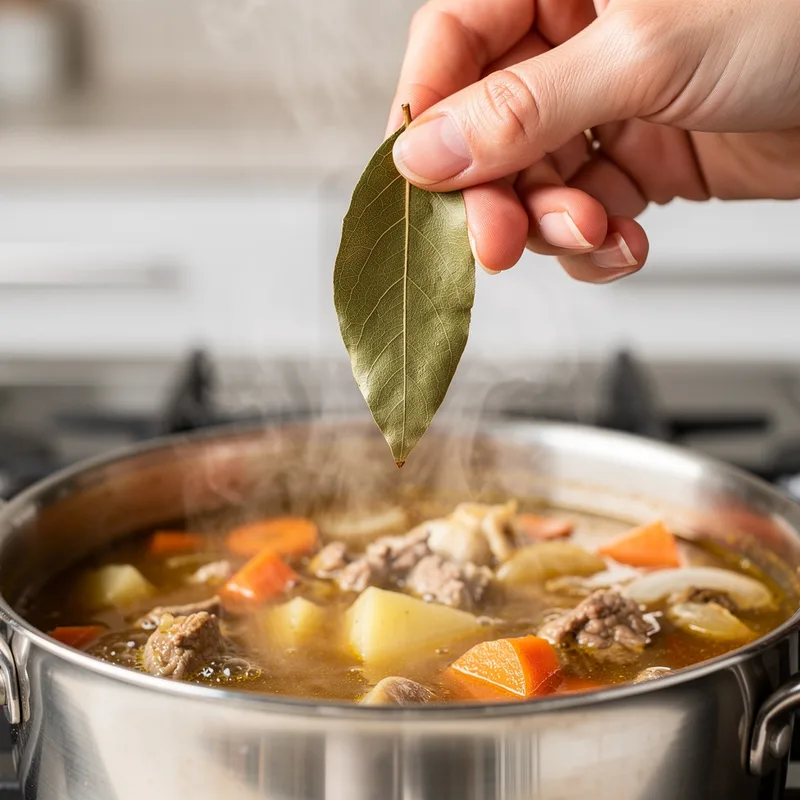
bay leaf
 5
2.3
5
2.3

- noun
- /beɪ liːf/
- In addition to the bay leaf, Jean adds a dash of red wine.
- add a bay leaf
- remove the bay leaf
- fresh or dried bay leaf
Loading YouTube…
Watch on YouTubeChicken, pork, garlic, soy sauce, vinegar, ground pepper and Bay leaf.
- Chicken, pork, garlic, soy sauce, vinegar, ground pepper and Bay leaf.
- You know, I'm saying it had a little bit of, you know, this thing a little bit heavy on the Bay leaf.
Examples
-
Return beef to the pot; add beans, ribs, chorizo, bay leaf, and 3 1/2 quarts of water.
-
Add celery, carrots, and a bay leaf for extra flavor.
Blog text (6) -
And about Mother McIver’s way with a pot roast of beef—never forget the bay leaf; that was the essential point.
Fiction book (1997) -
For soup, I find that adding baked vegetables (cook plain carrots and celery in the oven for 35 minutes) to chicken soup stock, plus onion and a bay leaf helps up the ante for flavor.
Blog text (12) -
Add the sweet potatoes and bay leaf, and cover with the stock or water.
-
Add wine, tomato paste, and bay leaf; heat to boiling, stirring to dissolve the tomato paste.
How Aromatic


Surface Forms
Morphology
The meaning of 'bay leaf' is directly compositional: it is the leaf of the bay (laurel) tree, and a B1 learner who knows 'bay' (the laurel tree) and 'leaf' can derive this referent and its culinary use. This straightforward noun+noun composition is cross-linguistically common, so the term is readily understandable from its constituents.
Etymology
Bay leaf comes from the bay tree called the bay laurel; cooks dry the leaf and drop it into soups and stews to give a quiet, herbal taste and then remove it before eating. So today bay leaf means 'a leaf used to flavor food'.