

batting average
 20
3.5
20
3.5

- noun
- /ˈbætɪŋ ˈævərɪdʒ/
- US
- His batting average this season is .320, showing he gets a hit 32% of the time he comes to bat.
- batting average and runs
- batting average performance measure
- batting average and percentage
Examples
-
During the regular AFL season, he led the league in batting average, on-base percentage, and slugging percentage.
Blog text (5) -
Harper had 22 home runs, 59 RBIs, and a .270 batting average this season in 139 games.
Blog text (8) -
This says that all other things being equal, a team with a higher batting average will score fewer runs.
-
Personally, I'm only interested in his batting average.
-
They're gonna know your Little League batting average by the time this is through.
-
Clark finished the 1992 season with a batting average of exactly .300.
Academic text (1992) -
If a baseball player has a .320 batting average, that is a real measure.
Blog text (12) -
He's got the best batting average on the Dodgers this year.
-
His memorable performance included a .414 batting average, two home runs, twelve hits, and several outstanding fielding plays.
Academic text (1994) -
Cabrera leads the AL with a .333 batting average and 130 RBI.
Blog text (3)
Synonyms
 739
1.3
739
1.3
The usual level of something, often shown by a number

The number of hits a batter gets divided by their official times at bat
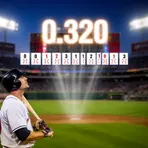
A short form of average showing a typical number, like batting average
Surface Forms
Morphology
The meaning — a numerical measure of success in batting — is directly derivable from 'batting' (acts of trying to hit a ball) combined with 'average' (a representative numeric measure). This noun–noun compositional pattern is common and cross-linguistically transparent, so a B1 learner who knows both constituents will likely understand the MWE's meaning.
Etymology
The term batting average comes from baseball: you divide the number of hits by the number of at-bats, the times a player tries to hit the ball. So it shows 'how often' a batter succeeds.