
bastard turtle
- noun
- /ˈbæstərd ˈtɜːrtl/
- Specialized
- The bastard turtle is also called the Atlantic ridley or Kemp’s ridley turtle.
Examples
-
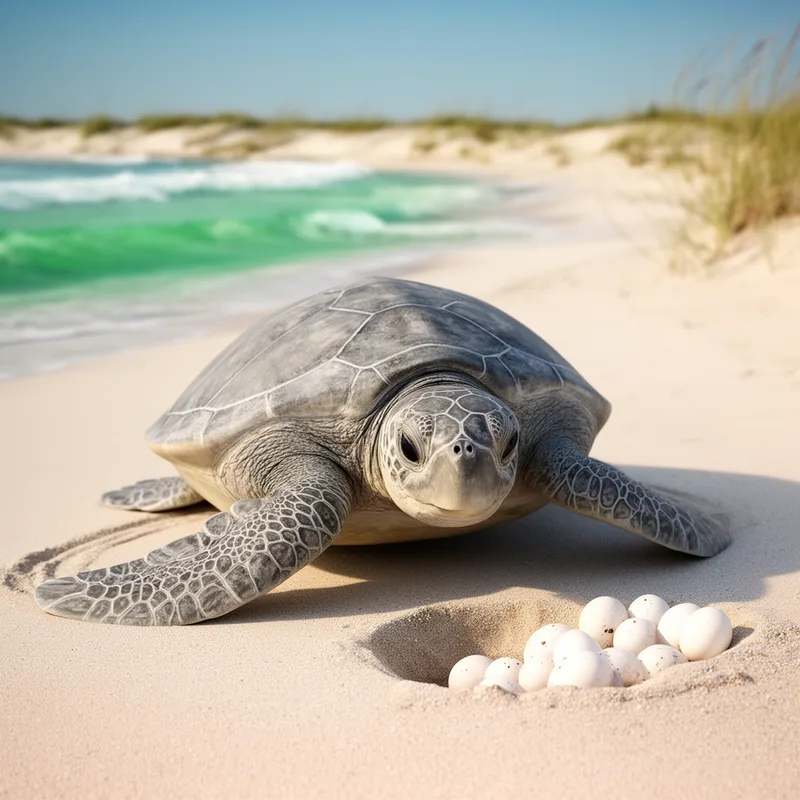
The bastard turtle is often seen nesting on sandy beaches along the Gulf Coast.
-
Conservationists work to protect the eggs of the endangered bastard turtle.
-
The bastard turtle is known for its unique shell.
-
Have you ever seen a bastard turtle in the wild?
-
Conservationists work to protect the eggs of the endangered bastard turtle.
-
The bastard turtle is often seen nesting on sandy beaches along the Gulf Coast.
-
The bastard turtle is also called the Atlantic ridley or Kemp’s ridley turtle.
Synonyms

A small sea turtle that nests on the Atlantic and Gulf coasts of North America

A small grey sea turtle that nests on Gulf and Atlantic coasts of North America, also called Kemp's ridley

A small sea turtle living on North America's Atlantic and Gulf coasts that nests in large groups
Surface Forms
Morphology
A learner who knows 'turtle' will recognize this as a type of turtle, so the compound partially conveys category information. However, 'bastard' as a modifier is archaic/ambiguous in animal names and does not transparently signal the species identity, colour, or geographic range, so the full, specific meaning cannot be derived from the parts.
Etymology
Bastard turtle may come from an old idea that the turtle looked like a mix of two kinds of turtles, so people called it bastard, meaning 'mixed' or 'not sure where it came from'. That's why the name stuck and now refers to the Atlantic or Kemp’s ridley sea turtle.

