
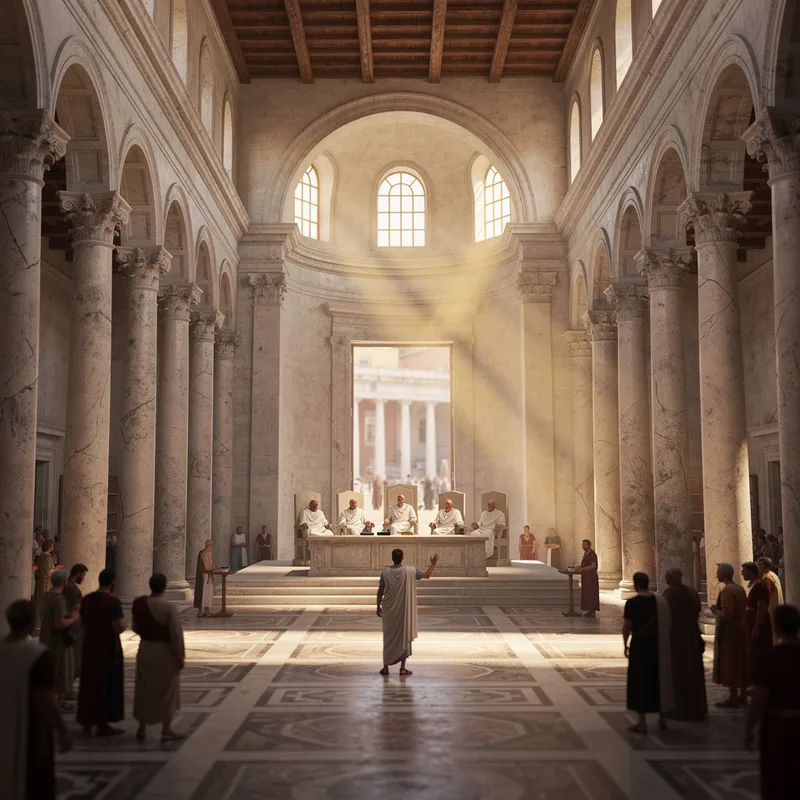
basilica
 3
7.8
3
7.8

- noun
- /bəˈzɪlɪkə/
- The basilica became the standard still used for churches around the world.
- the old basilica
- eleventh-century basilica
- an ancient basilica
Examples
-
The town's historic basilica was once the center of civic administration.
-
The Cathedra, too, is an altar reliquary designed as the visual focus of the basilica for the pilgrim entering the main portal.
Academic text (1995) -
So, beside the basilica, there are the offices of administration.
-
Indigenous people in native dress came from all parts of Mexico and gathered in the new basilica.
Blog text (10) -
The basilica likely dates to the mid-fourth century, possibly even during Pachomius's lifetime.
Academic text (2004) -
Now the Basilica Julia is on our left, with its luminescent rows of marble columns still under construction.
Academic text (2007) -
Two American soldiers were guarding the front of the basilica, ostensibly because it was used as an artillery spotting post.
Fiction book (1994) -
In ancient Rome, the basilica served as a public meeting place for legal proceedings.
-
Visitors can explore the remains of the ancient basilica that functioned as a court in Roman times.
Synonyms

 1
9.5
1
9.5
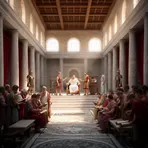
An ancient Roman building where people meet, hold law courts and do government business
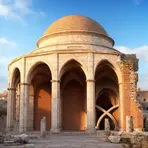
A building the ancient Romans built with arches, domes and vaults
Compounds
1
9.5
An ancient Roman building where people meet, hold law courts and do government business

Surface Forms
Etymology
Basilica comes from an old Greek word built on basil- meaning 'king' or 'royal'. It originally meant a 'royal hall', which helps explain why a Roman basilica was a large, important public building for law and meetings.