
baryonic
 1
9.9

- adjective
- /ˌbɛrɪˈɒnɪk/
- Specialized
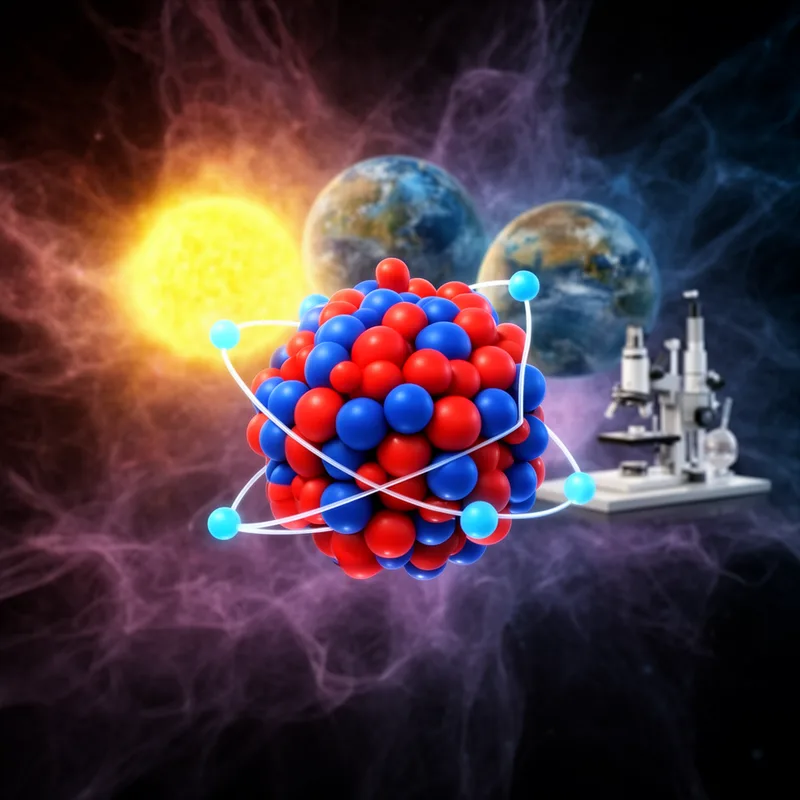
- Astronomers define all matter made up of protons and neutrons as baryonic matter.
- baryonic matter
- baryonic mass
- ordinary baryonic
Examples
-
In cosmology, baryonic matter is often contrasted with dark matter, which does not interact with light.
-
Yes, many people have offered explanations for dark matter that include plain old ordinary baryonic matter.
Blog text (22) -
Recent results have shown that this baryonic excess is a common feature of rich clusters.
Academic text (1995) -
About ten percent of the Universe's matter density is baryonic, while the majority is dark matter.
Academic text (2000) -
The stuff that we're made of, so-called normal, so-called baryonic matter is just a few percent of the universe.
-
Visible baryonic matter, that which we normally think of as what makes up the whole universe, is actually only 5% of the universe if our observations and axioms are sound.
Blog text (5) -
White dwarfs—the most common stellar remnants—contain most of the ordinary baryonic matter during the Degenerate Era.
Academic text (2000) -
About 5 percent of the universe is composed of baryonic matter, which includes protons and neutrons.
Surface Forms
Morphology
Etymology
Baryonic comes from the Greek root barys, meaning 'heavy', and from the particle name baryon, which was named as a 'heavy' particle. So baryonic describes ordinary matter made of heavy particles like protons and neutrons, unlike dark matter.