
baroclinic


 1
9.9
- adjective
- /ˌbɛrəˈklɪnɪk/
- Specialized
- The baroclinic zones along the coast contribute to the strength of the storms, particularly when temperatures fluctuate dramatically.
Examples
-
The black circle is evidence of baroclinic (mid-latitude) interaction with Sandy.
Blog text (32) -
This is where the concept of air pressure and something called "baroclinic forcing" comes into play.
Blog text (22) -
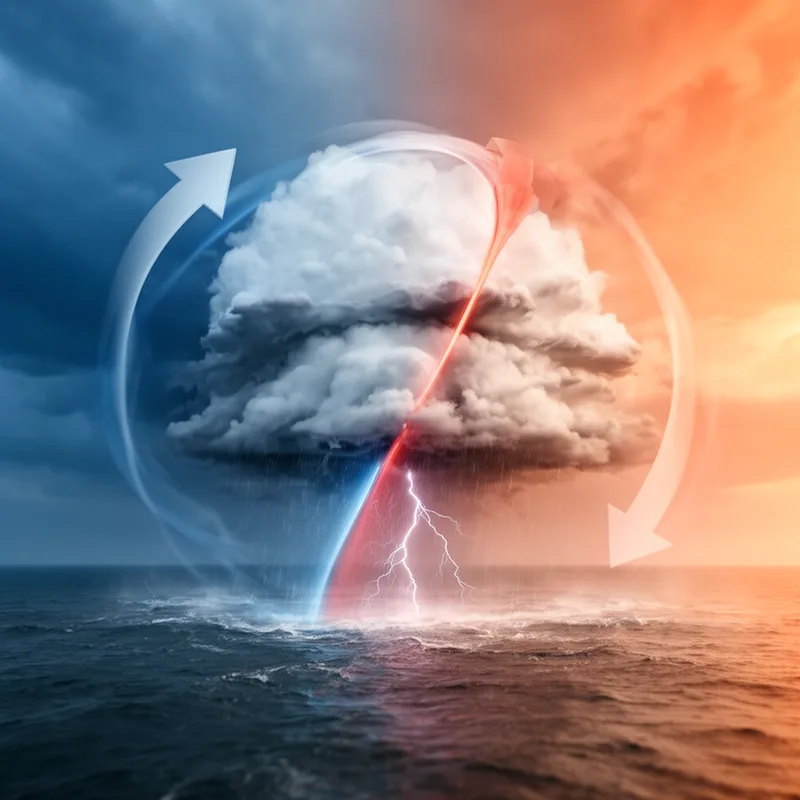
Baroclinic forcing is the energy a weather system receives when warm air and cold air mix with each other.
Blog text (22) -
As climate change triggers more swings in air temperatures, the odds of hurricanes strengthening due to baroclinic force would go up.
Blog text (18) -
While the warm Gulf Stream was a factor in the strengthening a day before landfall, the bigger factor was the baroclinic forcing from the collision with the cold air.
Blog text (14) -
The strongest baroclinic zones are where the strongest warm boundary currents are located adjacent to winter cold air-producing continents.
Blog text (22) -
Cold Arctic air and warm tropical air colliding was a recipe for strong baroclinic forcing and allowed Sandy's pressure to deepen considerably.
Blog text (22) -
When warm and cold air masses interact, it creates significant baroclinic forces that can lead to severe weather changes.
-
Meteorologists monitor baroclinic systems closely, as they often signal the potential for intense storms and shifting weather patterns.
How Baroclinic
- Specialized
1
9.9

- Specialized
Surface Forms
Morphology
baroclinic = barocline (opaque) = baro + clin + ic
The elements are technical combining forms unfamiliar to average learners, so the immediate base is not transparently meaningful to them.
Etymology
The word baroclinic combines baro- meaning 'pressure' as in barometer and -clinic from a root meaning 'to lean', like incline. So a baroclinic atmosphere is one where pressure and density surfaces 'lean' away from each other, and that 'lean' often makes storms and strong currents more likely.